
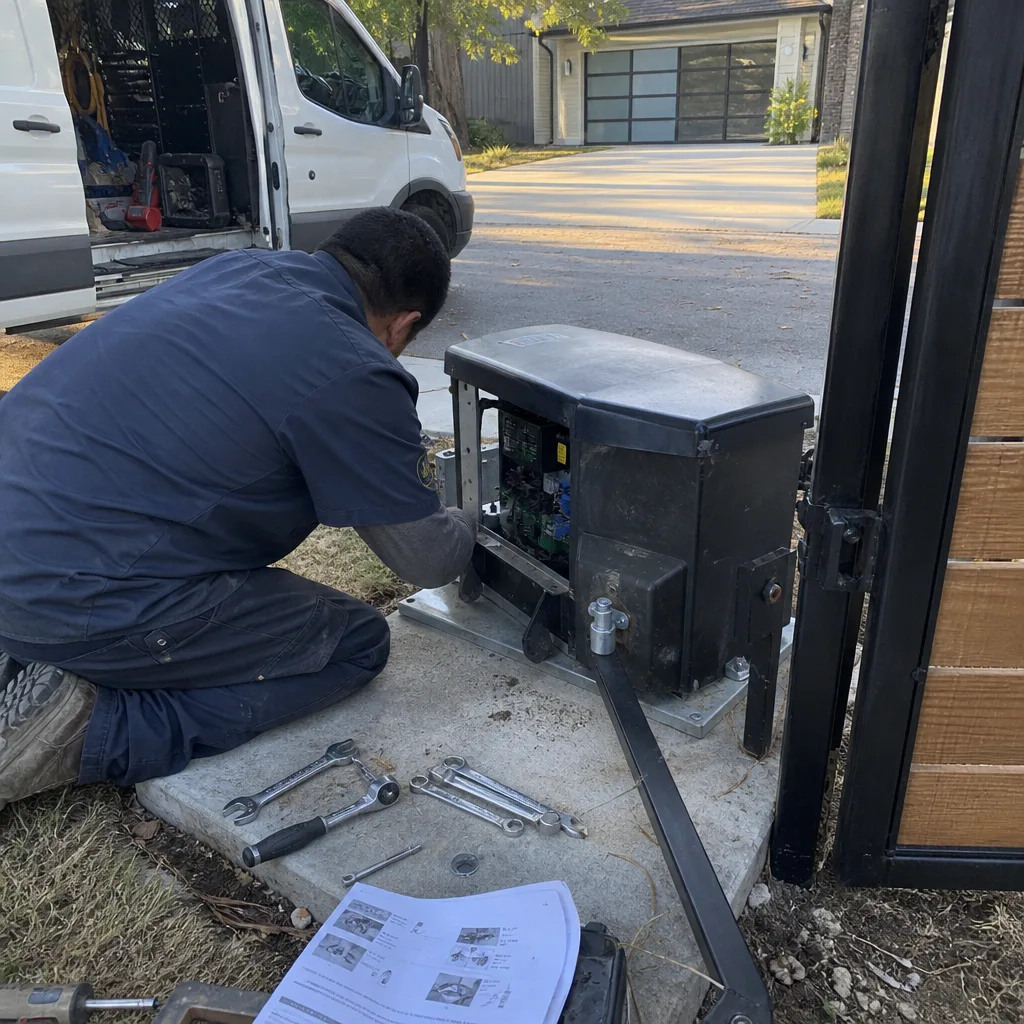
Last updated October 16, 2026
 Wrought iron
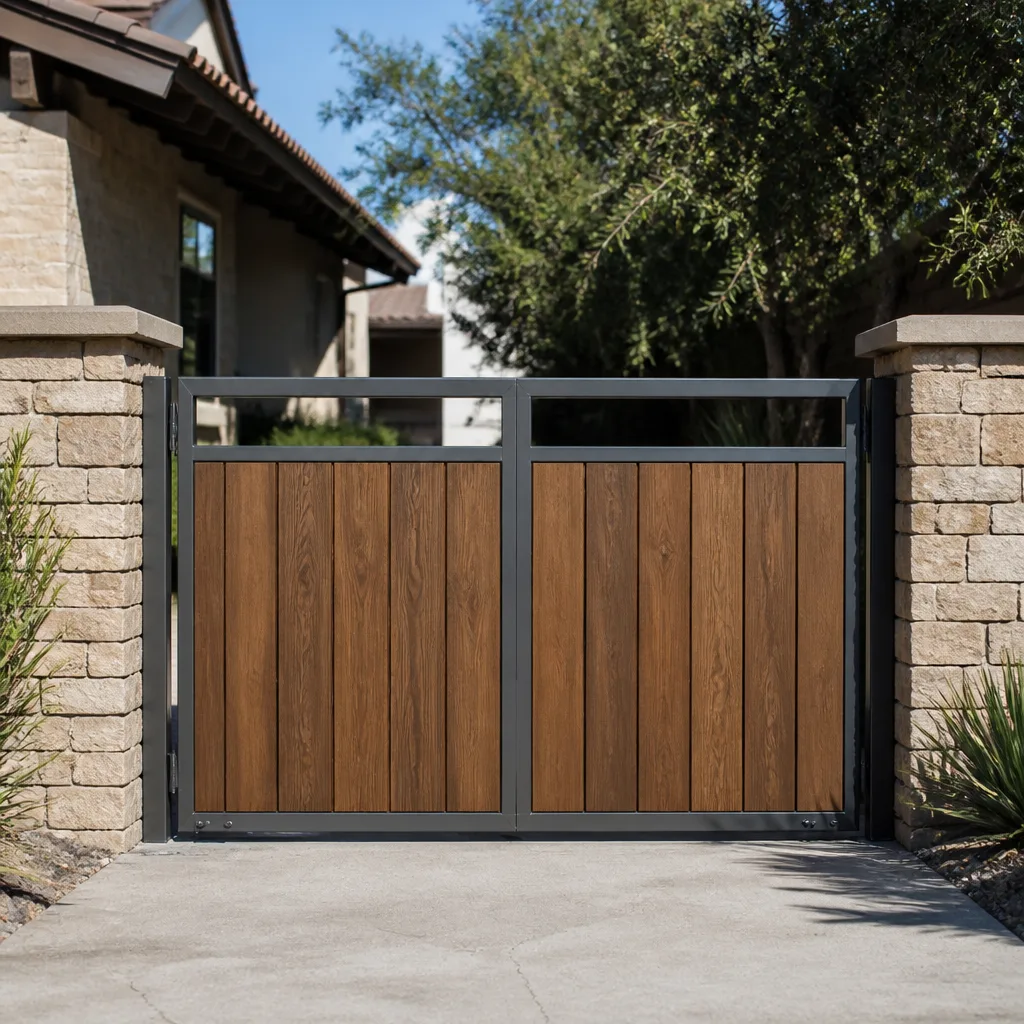 Wood & steel frame
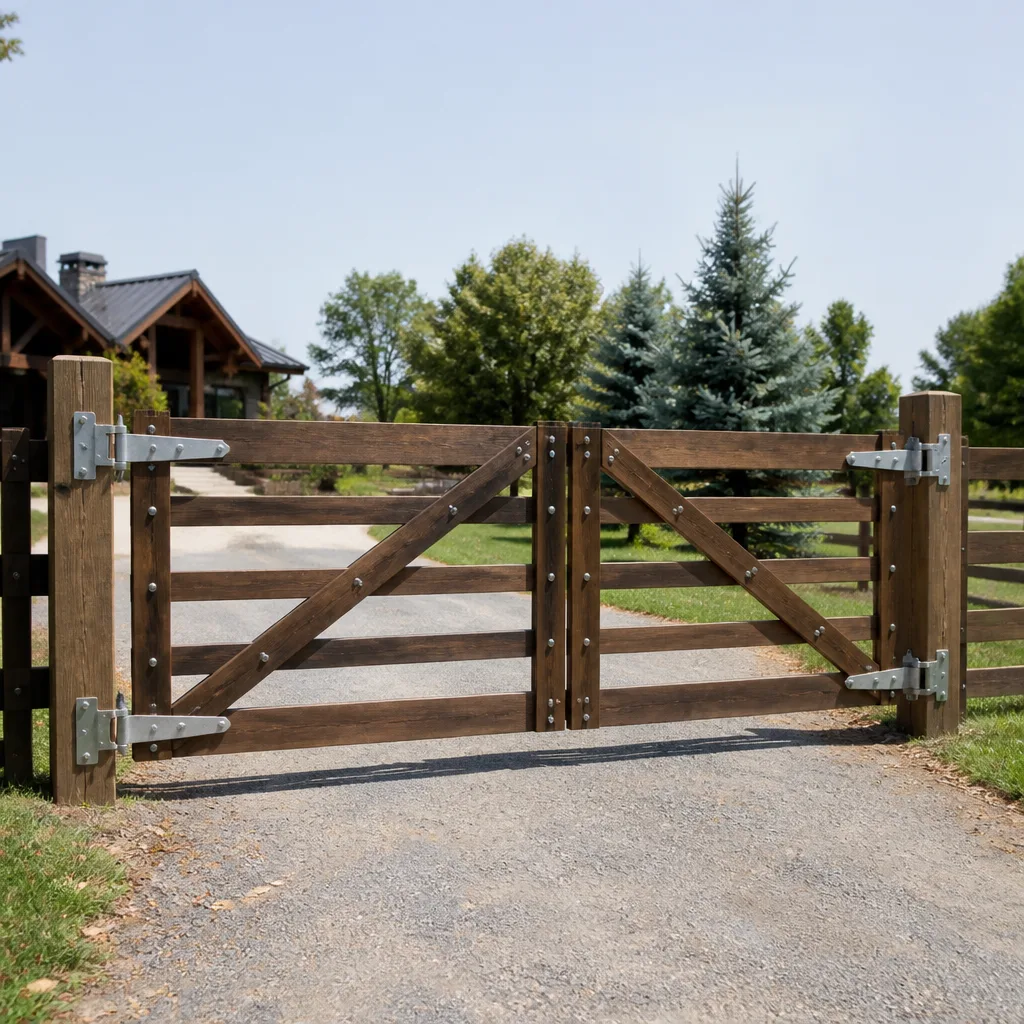 Farm & ranch
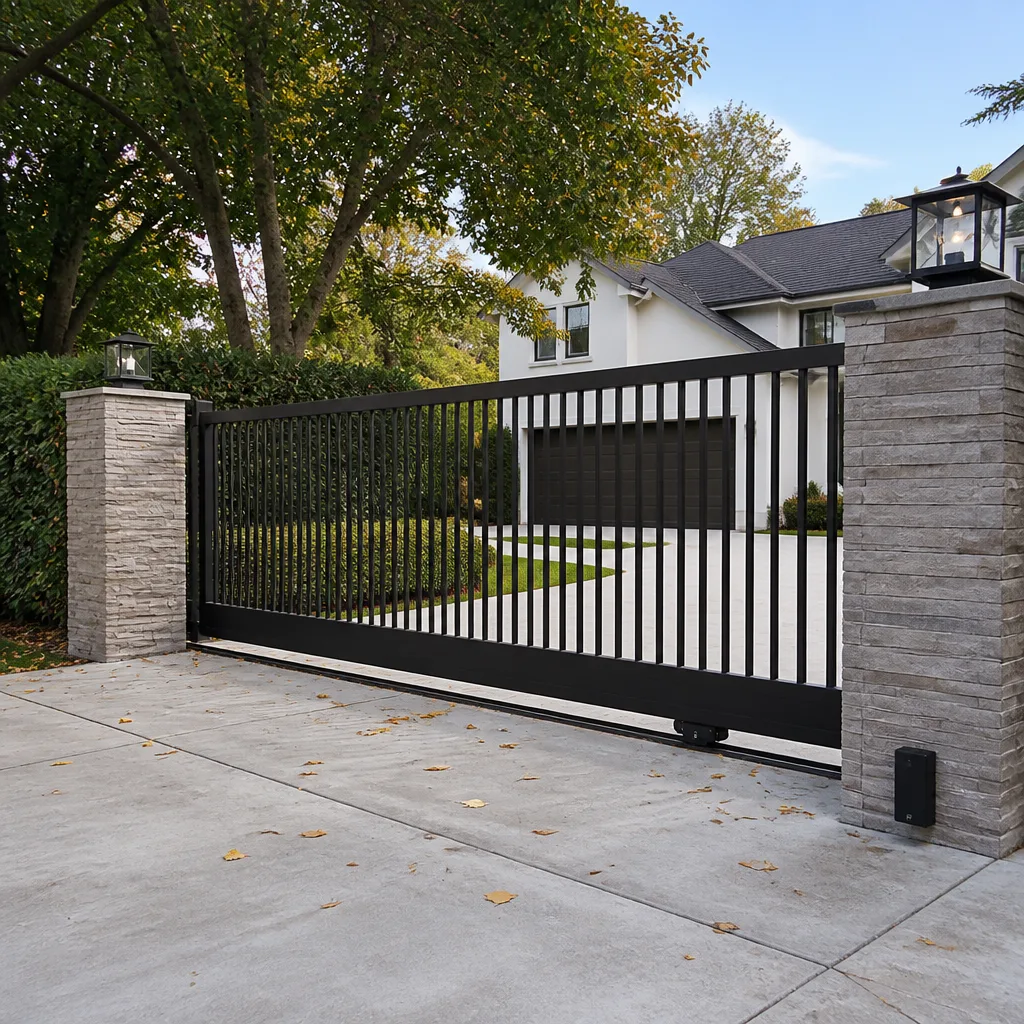 Sliding driveway gates
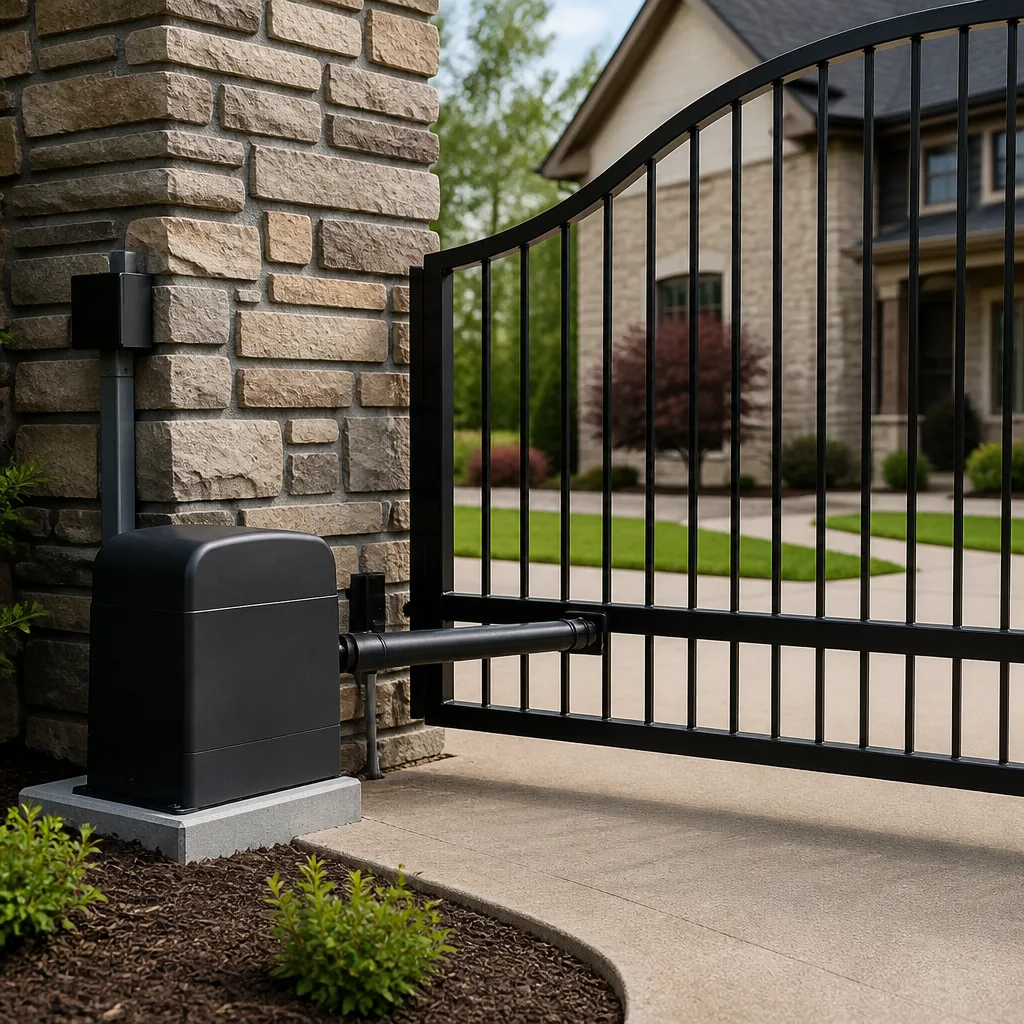 LiftMaster operators
Free on-site gate assessment - hinges, posts, and your LiftMaster or Nice gate operator checked before anything is quoted
The assessment is free and the quote is the invoice.
Get your free estimateThe Complete Guide to Gate Repair in Austin
Austin’s expansive clay soil shifts up to two inches seasonally, and that ground movement – not age, not rain, not wear and tear – is the single biggest reason gate posts fail in Central Texas neighborhoods. Most national gate repair guides were written for stable soil in places like Phoenix or Atlanta, which means they miss the actual cause of the problem when a gate in Tarrytown or Circle C starts dragging. This guide maps every common failure mode to the specific Austin condition that causes it, because knowing the cause changes what you fix, how long the repair lasts, and what you should expect to pay.
Quick Answer
Our Gate Repair services in Austin typically cost $80 to $800 depending on whether you need an adjustment, a hinge replacement, or a full post reset caused by shifting clay soil. Most swing-gate actuator swaps run $350 to $900 parts and labor, while a full gate post reset in expansive Vertisol clay ranges from $400 to $1,200. The best first step is a diagnostic visit that identifies whether the failure is mechanical, electrical, or structural before any work is quoted.
Styles & brands we work with
Table of Contents
- Why Austin’s Soil Breaks More Gates Than Any Other Cause
- Adjustment vs. Structural Repair: The $80 to $800 Question
- The Five Most Common Austin Gate Repairs and Their Real Prices
- Electric Gate Repair in Austin: Operators, Boards, and Safety Edges
- Gate Trade Terms Every Austin Homeowner Should Know
- The Kingswell Guarantee and the 365-Day Done Right Promise
- Repair vs. Replacement: When a New Gate Makes More Sense
Why Austin’s Soil Breaks More Gates Than Any Other Cause
Austin sits on Vertisol clay, a soil type that swells when wet and shrinks when dry. The seasonal swing is significant: soil movement of one to two inches per year is common in east and south Austin, and it doesn’t happen evenly. One gate post might heave upward a quarter inch while its mate stays put, and that differential movement twists the entire gate frame. We’ve seen steel post hinges snap clean off in Steiner Ranch and Westlake because the post moved just enough to put constant lateral pressure on the weld.
A repair crew working in Austin should do something different than one working Houston or Dallas. In Houston, the issue is usually humidity and rust on coastal-adjacent hardware. In Dallas, the soil is more stable, and the failures skew toward operator electronics and brand-specific board failures. In Austin, a good tech checks post plumb and gate level before touching the hinges or the operator, because if the post has moved, every other fix is temporary. That’s why our diagnostic visits start with a level and a tape measure, not a parts catalog.
What does this mean for your repair bill? If the post has heaved but the gate still swings, a proper fix means either shimming the hinge plate, re-welding the bracket, or in the worst case, pulling the post and resetting it in concrete below the active soil zone. That last option is the only permanent fix in Austin’s clay, and it’s why some quotes seem high compared to what a neighbor in a different city paid.
Adjustment vs. Structural Repair: The $80 to $800 Question
The single most useful thing you can learn about gate repair in Austin is the difference between an adjustment and a structural repair. An adjustment means the gate still has sound bones: the posts are plumb, the hinges are tight, the welds are solid, and the problem is alignment, limit switches, or a sag that can be corrected by tightening hardware. A structural repair means something load-bearing has failed: a hinge plate has torn loose, a weld has cracked, a post has rotated, or the gate frame itself has twisted.
Here’s the plain version of what each category includes:
- Adjustment (typically $80 to $250): tightening hinge bolts, realigning the gate to the latch, adjusting the operator’s open and close limits, lubricating tension points, replacing worn washers or bushings, and correcting minor sag with tension rods or turnbuckles.
- Hinge and bracket repair (typically $200 to $450): removing a bent or torn hinge, welding a cracked plate, installing reinforcement plates, and replacing the hinge pins or bearings.
- Structure-level repair (typically $400 to $800+): cutting out a failed weld, straightening a bent frame member, replacing a rotted or cracked post, and resetting a post that has heaved out of plumb in clay soil.
The price swing sounds dramatic, and it is, but it’s honest. A gate that only needs a limit switch tweak shouldn’t cost $800, and a gate with a snapped hinge weld shouldn’t be sold a $150 “tune-up” either. That’s why we always put the diagnostic findings in writing and quote the fix before any work starts. You should know which category you’re in before you approve anything.
The Five Most Common Austin Gate Repairs and Their Real Prices
We’ve been repairing gates in Austin since 2008, and the same five jobs come up again and again. These are the actual price ranges we quote in this market, stated before you ask. Prices vary with gate size, material, and access, but they’re honest starting points.
- Post reset or re-plumb ($400 to $1,200): Austin’s expanding clay heaves posts out of alignment. The fix means excavating around the post, re-setting it in concrete below the shrink-swell zone, and re-hanging the gate. This is the most expensive common repair and the only one that’s truly permanent.
- Gate sag correction ($150 to $450): Steel and wood gates sag over time under their own weight, and Austin’s heat cycles accelerate the fatigue. We correct sag with tension rods, frame reinforcement, or hinge replacement. If the frame itself is twisted, the price moves toward the structural range.
- Actuator or operator arm replacement ($350 to $900): The actuator – the motorized arm that physically pushes the gate open – is a wear item. We replace actuators on Elite, Mighty Mule, LiftMaster, and FAAC systems regularly. Parts are brand-specific, and labor runs one to three hours depending on the mount.
- Control board replacement ($250 to $650): Austin’s summer lightning and power surges are hard on gate-operator circuit boards. A blown board usually means the gate won’t respond to the remote or the keypad. This repair is parts-heavy and the board brand determines the price.
- Hinge and weld repair ($150 to $500): The weld points where the hinge plate meets the post are the highest-stress locations on any Austin gate. We grind out failed welds, re-weld, and often add a reinforcement gusset so the same crack doesn’t come back next season.
Every one of those prices is quoted and agreed before a single bolt gets turned. If we open the gate and find more damage than expected, we stop, call you, and explain the new price before proceeding. No surprises after the job is done.
Electric Gate Repair in Austin: Operators, Boards, and Safety Edges
Electric gate repair in Austin has its own failure patterns. The operator (the motorized box or arm that moves the gate), the control board (the brain that tells the operator when to start and stop), and the safety edges (the pressure-sensitive strips that reverse the gate if it hits something) are the three components most likely to fail. Austin heat accelerates capacitor failure in operators, and our frequent thunderstorms are a consistent source of control-board damage.
Here’s how to tell the difference before you call:
- Gate makes a humming sound but doesn’t move: likely a capacitor or a jammed drive mechanism, and the fix runs $150 to $400.
- Gate opens but won’t close, or closes but won’t open: usually a limit switch failure or a misaligned safety edge, typically $100 to $300 to correct.
- Remote and keypad don’t work, but the gate works manually: the control board or receiver has failed, usually $250 to $650 depending on the brand.
- Gate stops and reverses for no reason: the safety edges are triggering falsely, or the force settings have drifted. This is usually an adjustment call, $100 to $250.
One thing worth saying plainly: electric gates have pinch points and heavy moving parts, and the operator can deliver enough force to injure someone. We recommend a trained professional handle any repair that involves removing the operator cover, the control board, or the safety edges. See our DIY vs Professional Gate Repair: The Austin Homeowner’s Decision Guide for help deciding when to call in a pro. The cover itself hides capacitors that can hold a charge even with the power off, so if you’re not familiar with electrical components, please don’t poke around inside.
Gate Trade Terms Every Austin Homeowner Should Know
When you call a gate company, being able to name the part that’s failing saves time and gets you a more accurate phone quote. These are the real trade terms we use on site, decoded in plain language.
- Drop rod: a metal rod on the bottom of a double gate that drops into a hole in the concrete to hold one leaf in place while the other swings.
- Keeper: the bracket on the post that receives the latch or the drop rod. When a keeper is bent or worn, the gate won’t stay closed even if the latch still works.
- Pilaster cap: a decorative cap on top of a stone or brick gate column. A missing or cracked cap lets water into the column, which rusts the internal hardware and cracks the masonry in Austin’s freeze-thaw cycles.
- Limit switch: the sensor inside an operator that tells it how far to open and close. When a limit switch fails, the gate may stop short, overtravel, or reverse at the wrong point.
- Crash post: a steel post installed behind a gate to absorb impact from a vehicle. Austin families with young drivers or long driveways with slope often add these after the first dent.
If you can tell us “the drop rod isn’t engaging the keeper on the right leaf,” we can predict most of the repair before we arrive. That doesn’t replace a diagnostic visit, but it means the tech in the truck is already carrying the right parts.
The Kingswell Guarantee and the 365-Day Done Right Promise
Portcullis Gate Repair is an independently owned Kingswell company, and every location is held to the same four promises: a written price before any work starts, a real arrival window, a clean job site, and a written guarantee on the repair. That last part is the one that matters most when you’ve already been burned by a gate company that disappeared after a failed fix.
Our version of that guarantee is the 365-Day Done Right Promise. Here’s what it means in plain terms:
- Every repair gets a written guarantee printed on the invoice.
- If the repair fails within 365 days, we come back and fix it at no charge.
- The return visit is free. You pay nothing for the call, the labor, or the parts to correct the same failure.
- The guarantee covers the specific repair we performed, clearly described in writing on your invoice.
The Kingswell Way is five commitments on every single job: say the price before the work, show up in the window we gave, leave the place cleaner than we found it, put the guarantee in writing, and come back if it fails. Not a franchise slogan. A written standard every Portcullis location follows.
Repair vs. Replacement: When a New Gate Makes More Sense
Sometimes gate installation in Austin is the smarter money. If the gate is more than 20 years old, the frame is rusted through in multiple places, the posts have cracked or heaved beyond re-setting, or the operator is an obsolete model with no parts support, a replacement often costs less than a series of escalating repairs.
Here’s the honest math we walk customers through:
- Repair makes sense when: the gate frame is sound, the posts are plumb or can be re-set, the operator is under 10 years old and a current brand like LiftMaster, FAAC, or Elite, and the total repair cost is under half the cost of a new gate installed.
- Replacement makes sense when: the frame is twisted, the posts are cracked through, the operator is obsolete and the board replacement alone is $600, or you’re on the third repair in three years. At that point, the per-year cost of keeping the old gate exceeds the cost of a new one.
If you go the replacement route, ask whether the new post footings will be dug below the active clay zone. In Austin, that means a minimum depth of 30 to 36 inches and concrete that’s mixed for the soil conditions, not the cheapest bag at the hardware store. A properly set post in this soil will outlast the gate hanging on it.
Common Mistakes to Avoid
- Approving a repair without a written price first. If a gate company won’t quote you in writing before starting work, thank them for their time and call someone who will. You have no leverage once the gate is disassembled and the “unexpected damage” appears.
- Ignoring a gate that drags on the ground. A gate that scrapes puts extra load on the hinges, the actuator, and the concrete at the latch point every time it cycles. The $300 actuator you save today becomes a $900 actuator plus a hinge repair in six months.
- Lubricating the problem away. Spraying lubricant on a gate with a structural issue masks the symptom for a few weeks and accelerates the failure. Lubricant belongs on a healthy gate as maintenance, not on a failing gate as medicine.
- Choosing the cheapest quote without comparing the guarantee. Austin gate companies that undercut on price often cut the guarantee to match. Ask what’s written on the invoice. A 30-day warranty on a $400 repair is not the same product as a 365-day written guarantee.
- Replacing the operator when the post is the problem. In Austin’s clay soil, a leaning post causes the operator to work against the gate’s weight every cycle. A new operator on a bad post burns out inside a year. Fix the post first.
- Calling a welder before a gate company. Welding the hinge back onto a post that’s out of plumb just moves the failure point to the next weakest weld. The weld will fail again in months unless the post alignment is corrected first.
See the difference
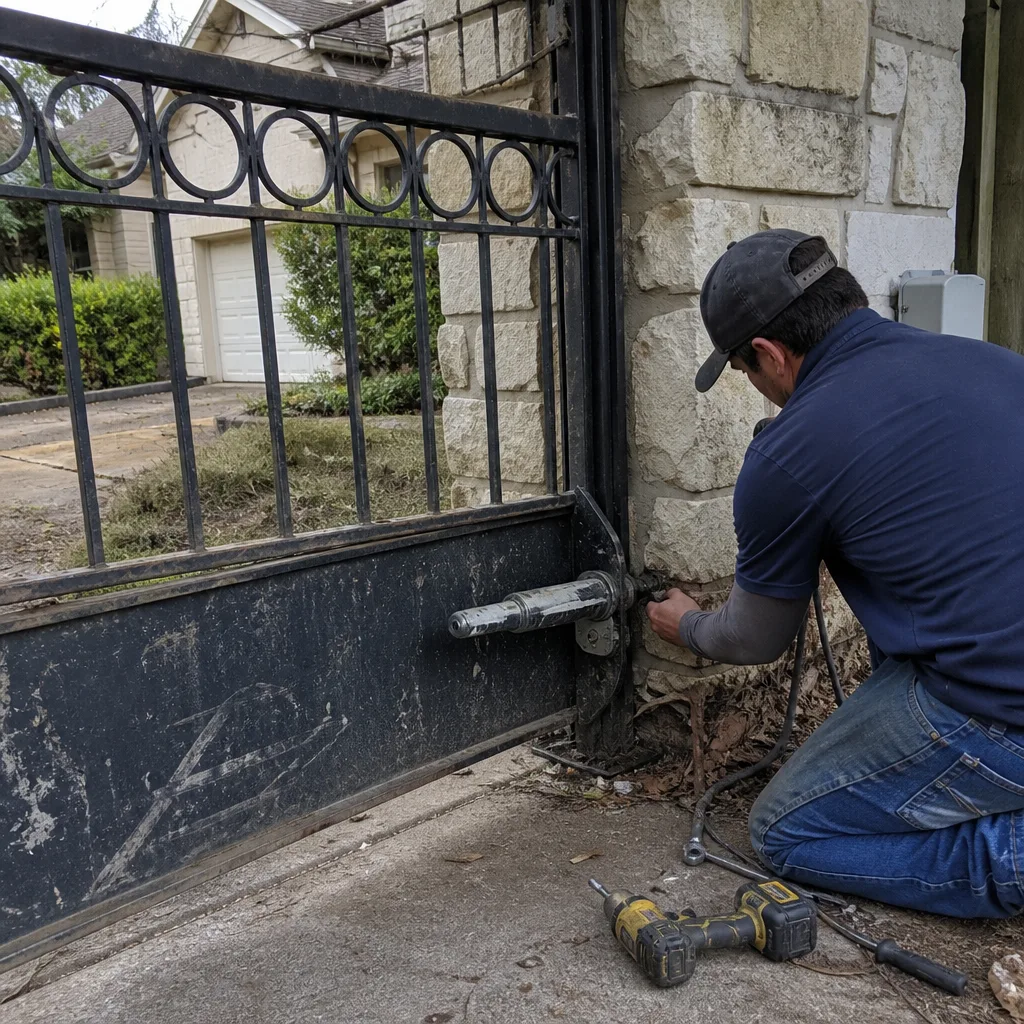 Before
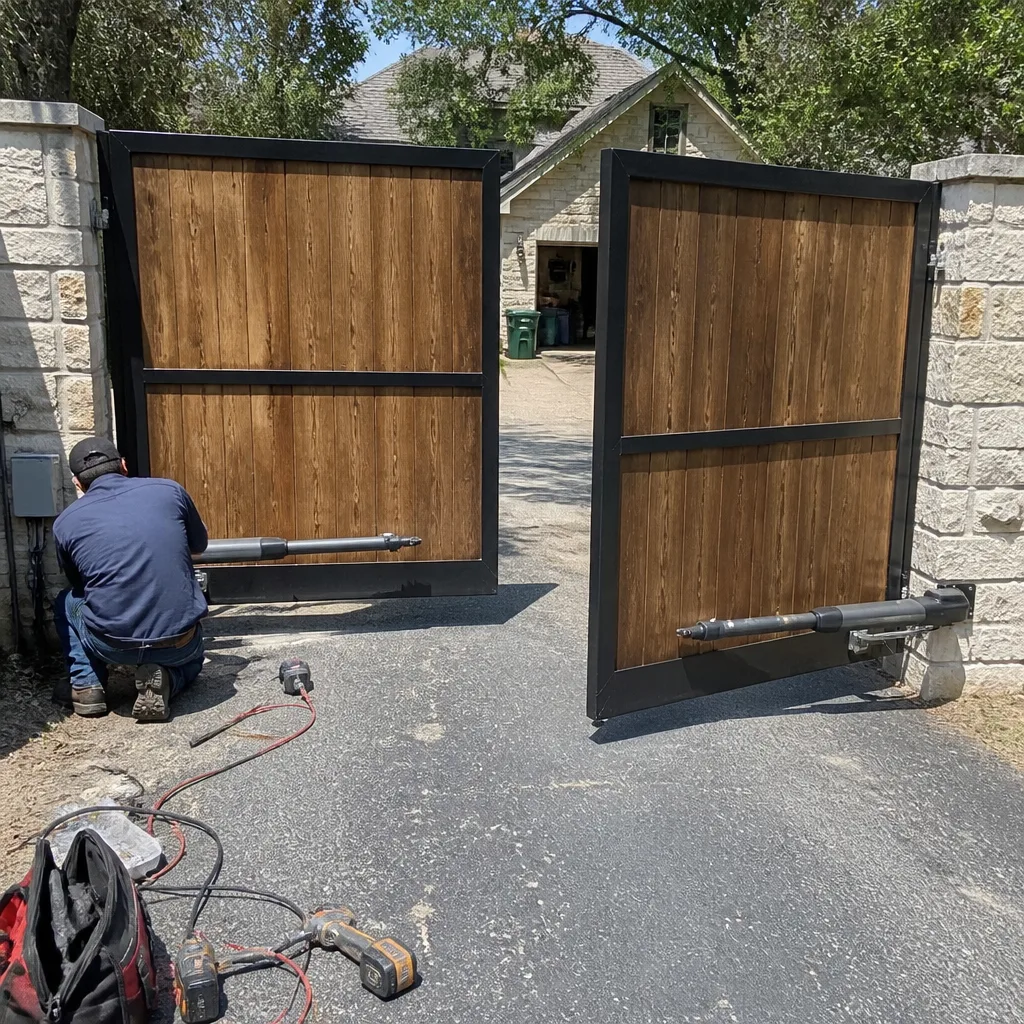 After
After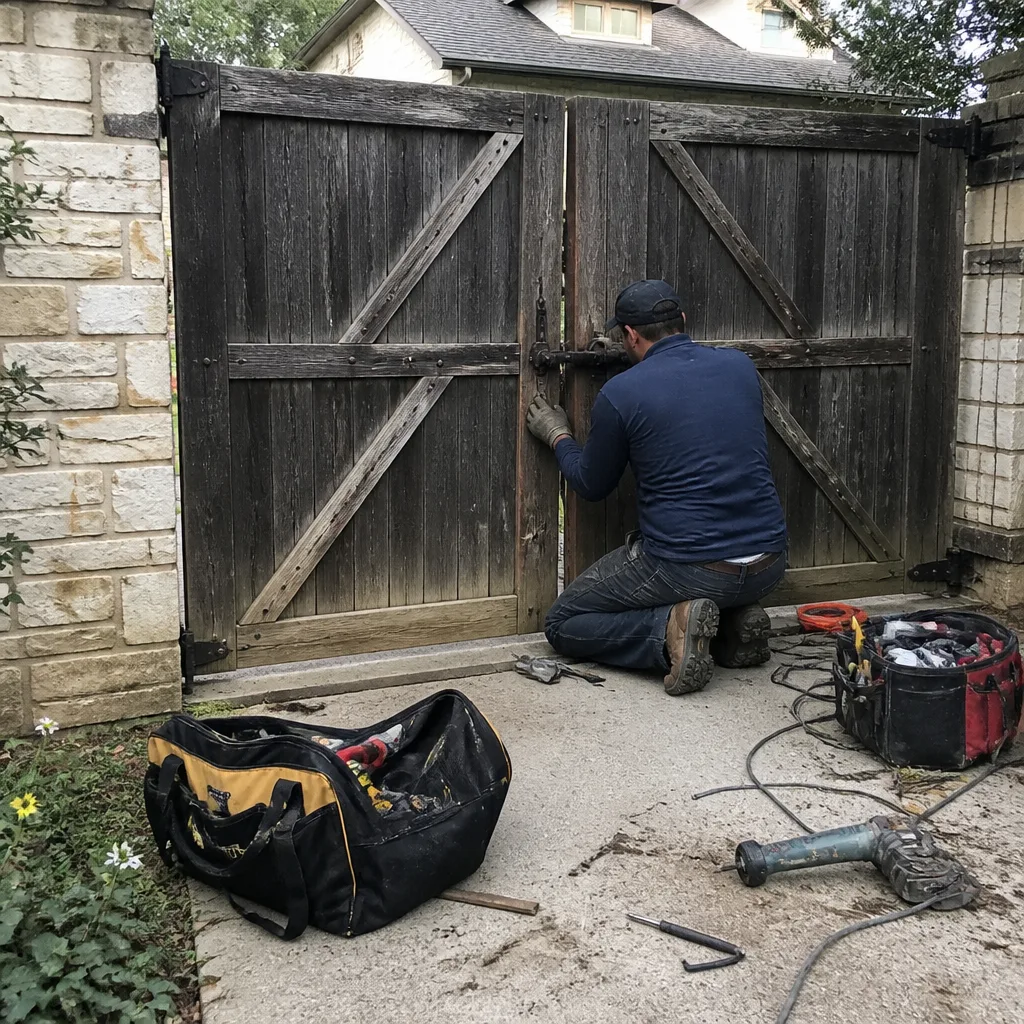 Before
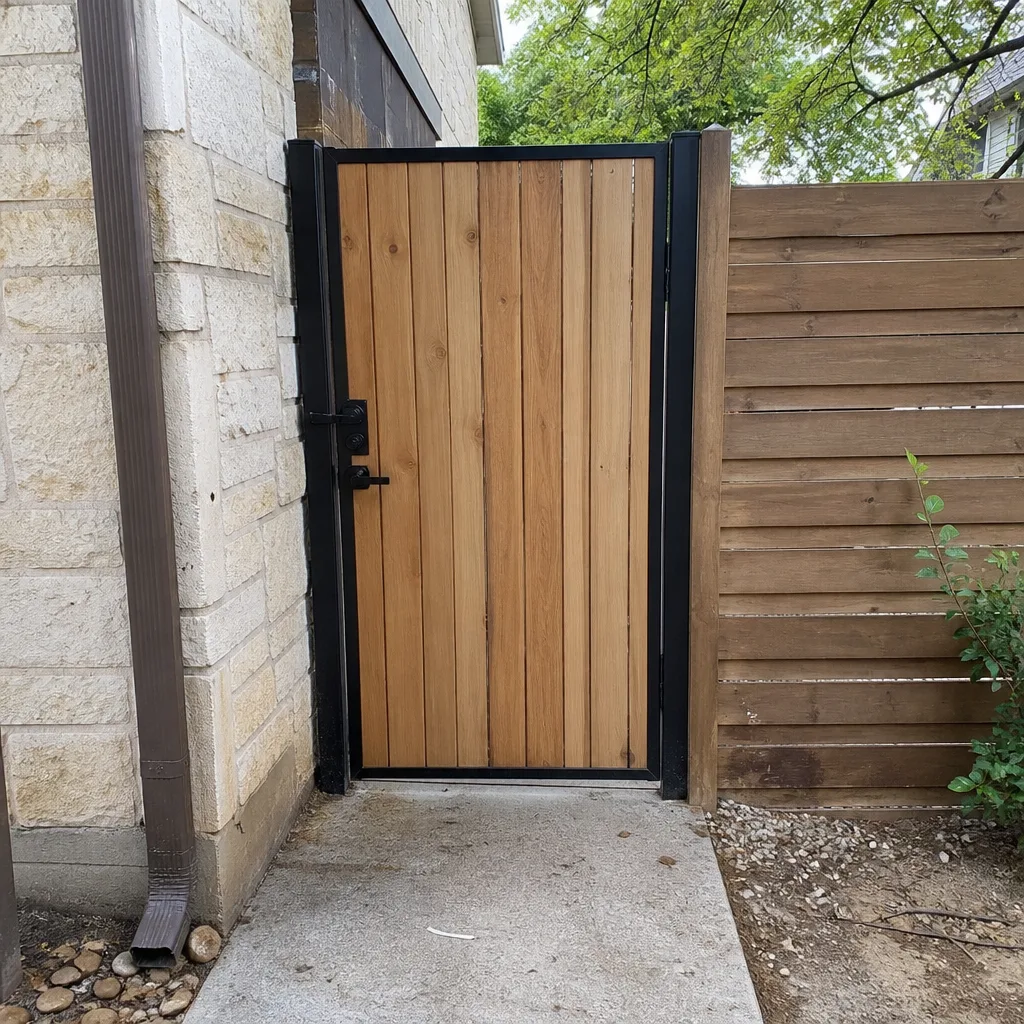 After
After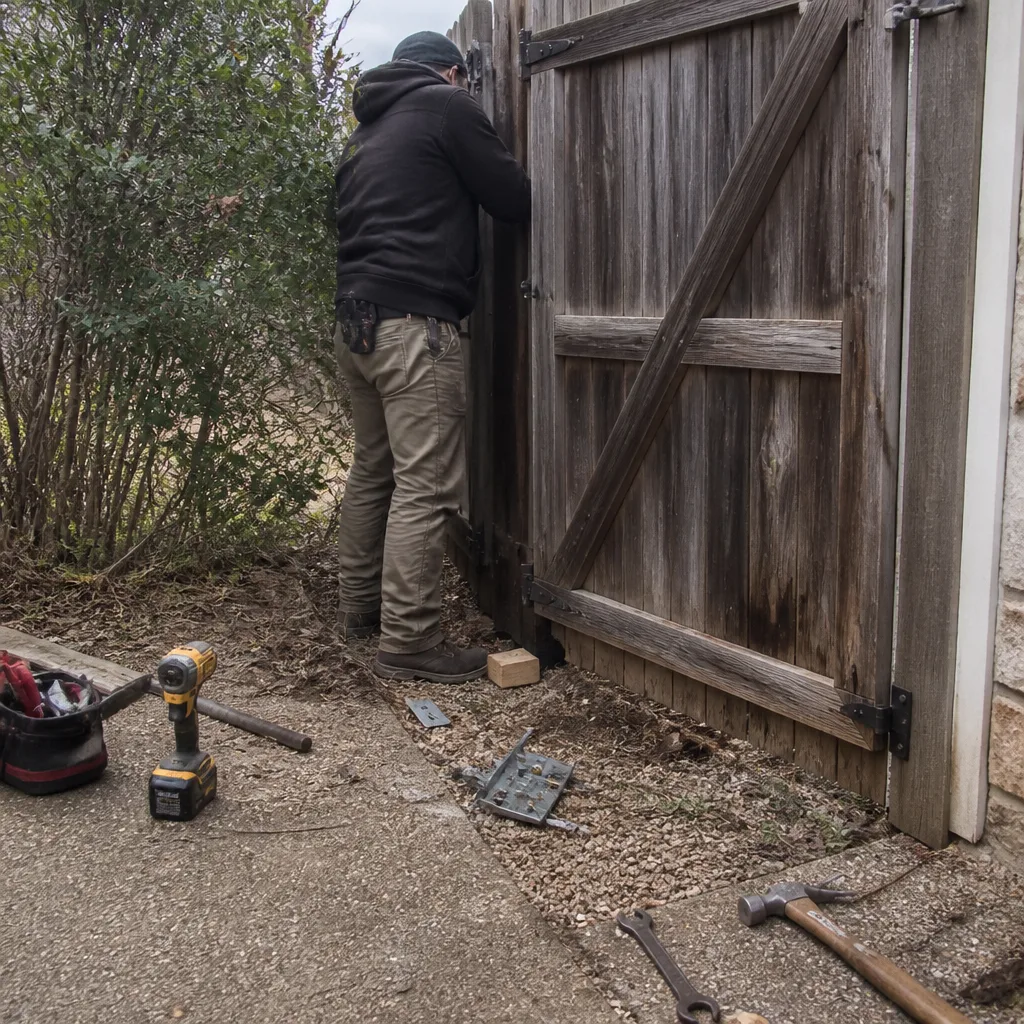 Before
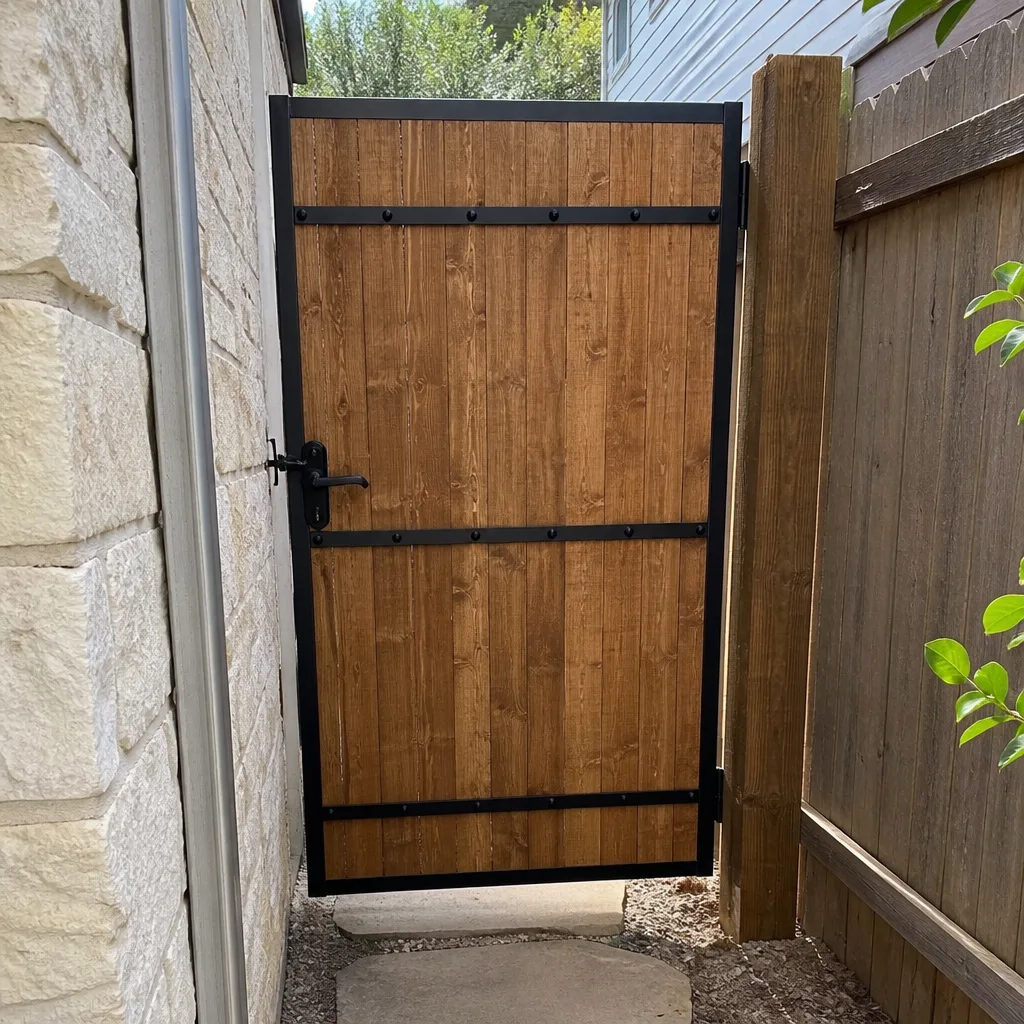 After
AfterWhen to Call a Professional
Call a gate professional when the gate drags or scrapes, when it visibly sags or leans, when the operator makes noise but doesn’t move the gate, when the remote stops working, when the gate reverses for no reason, or when you see a crack in a weld, hinge, or post. Any repair involving the operator’s internal components, the control board, the safety edges, or the springs and tension systems is not a safe DIY job. Gate springs and operator drive mechanisms store enough energy to cause serious injury if they let go. Portcullis Gate Repair Austin offers free estimates in Austin and answers the phone with a live person around the clock – call (254) 280-0629 to schedule a diagnostic visit.
Frequently Asked Questions
Gate repair in Austin typically costs $80 to $800 depending on whether the issue is an adjustment, a hinge repair, or a post reset. The most common jobs – post re-plumb due to clay soil movement, actuator swaps, control board replacements, and sag correction – fall between $150 and $900 parts and labor. Call (254) 280-0629 for an exact quote on your gate; estimates are free.
In most cases, yes, we can schedule same-day or next-day service for active gate failures in the Austin area. Emergency gate repairs – a gate stuck open or a broken post – are prioritized because they affect security. Call (254) 280-0629 and a live person will give you a real arrival window, not an automated callback.
Leaning gate posts in Austin are caused primarily by Vertisol clay soil, which expands when wet and shrinks when dry, heaving the post out of plumb over several seasons. A proper repair means re-setting the post in concrete below the active shrink-swell zone, not just pushing it upright and packing dirt around it. We check post plumb on every diagnostic visit before recommending any other repair.
Yes, we handle the complete electric gate system including the operator, control board, safety edges, keypad, and the power run from the service panel to the operator. Many Austin homes have the gate electronics on a separate breaker, and we coordinate with the electrical layout already on your property. This work is part of our electric gate repair service.
An adjustment corrects alignment, limits, or hardware tightness on a gate whose structure is still sound, and it typically costs $80 to $250. A structural repair addresses a failed component like a torn hinge, cracked weld, or heaved post, and it runs $200 to $800 or more. We always diagnose the category in writing before quoting.
We service nine major gate-operator brands including LiftMaster, FAAC, BFT, Linear, Viking, Ghost Controls, DoorKing, Elite, and Mighty Mule. The technician who arrives already knows the specific system on your property, which means fewer misdiagnoses and fewer second trips. Call (254) 280-0629 with your operator’s brand, and we’ll bring the right parts.
Yes, every repair carries the 365-Day Done Right Promise: a written guarantee on the invoice, and if the repair fails within 365 days, we return and fix it at no charge. The second visit is free. That guarantee is the same Kingswell standard every Portcullis location follows, and it’s written down, not just implied.
The Bottom Line
Gate repair in Austin is different from gate repair anywhere else because the city’s expansive clay soil, summer heat, and storm activity create a distinct set of failure patterns. A gate that drags may be a simple adjustment or a structural post failure, and knowing which one you’re dealing with changes the price from $80 to $800. The most important thing you can do is get a written diagnosis and a written price before any work begins, and to ask what the guarantee actually covers and for how long. We’ve been fixing gates in Austin since 2008, and we put every one of those answers in writing on every invoice. For more guides & resources, visit our blog. Call (254) 280-0629 for a free estimate, and a live person will answer.
Written by Dean Prescott, Owner at Portcullis Gate Repair Austin, serving Austin since 2008.