
 Wrought iron
 Wood & steel frame
 Farm & ranch
 Sliding driveway gates
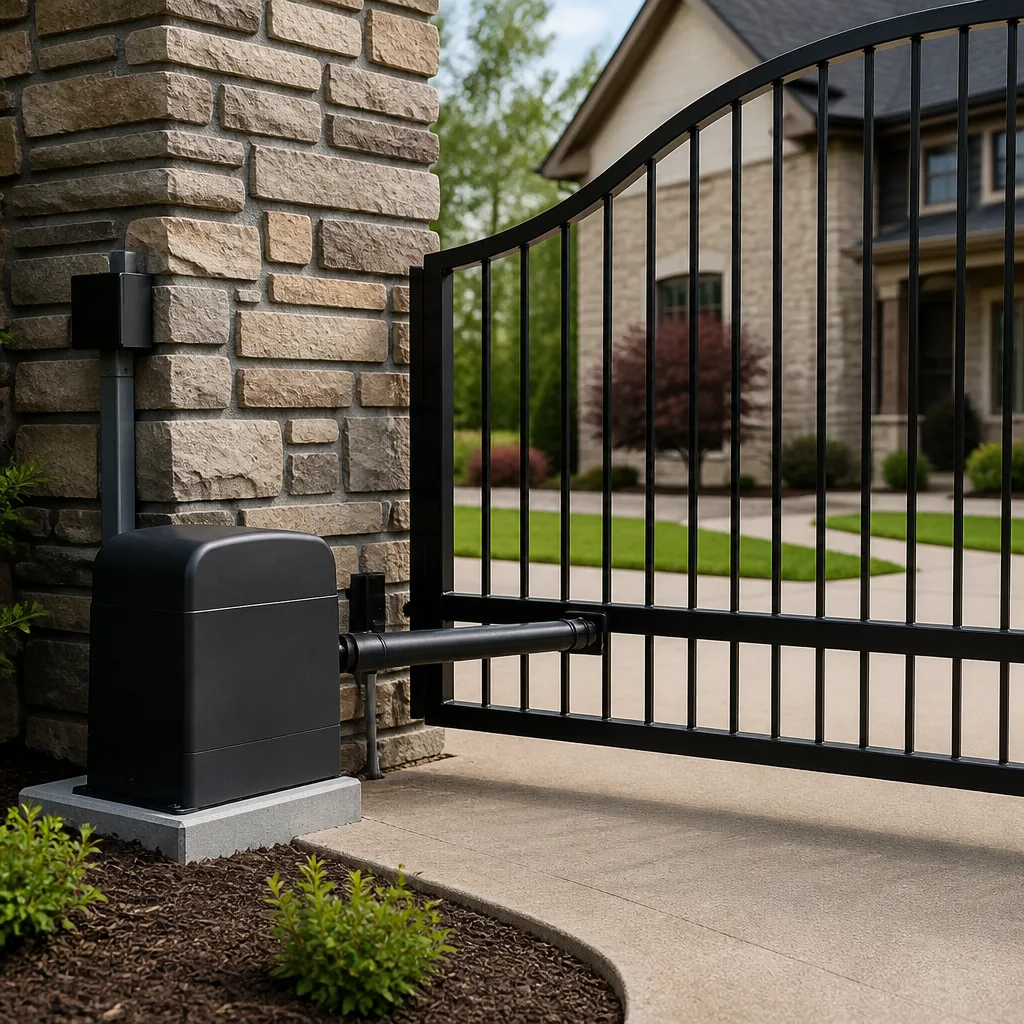 LiftMaster operators
Free on-site gate assessment - hinges, posts, and your LiftMaster or Nice gate operator checked before anything is quoted
The assessment is free and the quote is the invoice.
Get your free estimateBFT Access Control Installation: The Austin Owner’s Guide
BFT access control installation in Austin typically runs $450 to $1,400 installed, depending on whether you’re adding a keypad, card reader, phone-based entry system, or a full multi-device setup. We stock BFT-compatible control boards, receivers, keypads, and card readers on our trucks, and we can usually have a technician out the same day you call. Most Austin owners discover the problem the same way: the remote stops working, the keypad goes dark, or the gate simply won’t respond when a delivery driver presses the call button at the street. The part that fails is rarely the gate motor itself. It’s the access control layer: the circuit board that tells the motor what to do, the receiver that listens for your remote, or the keypad that’s been baking in Texas sun for six summers.
Which BFT Models This Applies To
BFT builds access control hardware that spans their entire operator line, from the smaller Deimos and Phobos swing-gate motors to the heavier Rigel and Sub sliding-gate units. The access control installation is the brain and ears of the system, not the muscle, so compatibility depends on the control board revision as much as the operator model. If you’re matching a receiver or keypad to an existing BFT board, look at the board’s label. BFT boards have a revision code printed on a sticker, usually something like “UCS 2.3” or “RIGEL 5.” Match that revision, not just the operator name, and you’ll avoid the most common mismatch we see in Austin: a keypad wired to a board that never had an input for it in the first place.
On OEM versus aftermarket: BFT’s own receivers and keypads are solid, but they’re not the only option. For older BFT systems where the OEM receiver is backordered or discontinued, we often install a quality aftermarket receiver that talks to the same radio frequency and the same relay input. The catch is the relay timing and the board’s sensitivity to the receiver’s output. A generic receiver can chatter the relay and make the gate stutter open and shut. We bench-test that before we leave the shop, so you don’t get a gate that twitches every time a neighbor’s garage door opens. For the record, we’re an independent service company. We’re not affiliated with BFT, but we work on their equipment every week.
Styles & brands we work with
Signs Your BFT Access Control Installation Is Failing
- The remote works only when you’re ten feet from the gate. The receiver’s antenna connection or the receiver itself has degraded. In Austin, heat cycling loosens solder joints on older receiver boards, and the range drops off a cliff. A new receiver or a relocated antenna usually fixes this.
- The keypad lights up, but the gate doesn’t move after you enter the code. The keypad’s relay output is shot, or the control board’s input terminal has corrosion. We see this a lot on keypads mounted on north-facing brick, where morning condensation never fully dries.
- Every remote stopped working at once, but the gate opens with the manual button. That’s almost always the receiver. If the manual control still fires the motor, the operator is fine. You’re looking at a receiver swap, not a motor replacement.
- You can hear a click, but the gate only moves partway and then reverses. That’s typically the control board misreading the safety input or the limit signal. The access control layer thinks there’s an obstruction. A board-level diagnostic tells us whether it’s a bad input or a bad board.
- The call box at the street works for some visitors but not others. Phone-entry systems route through a cellular or landline module, and in Austin’s older neighborhoods, copper line quality kills the signal. We’ll test the module first before replacing anything expensive.
See the difference
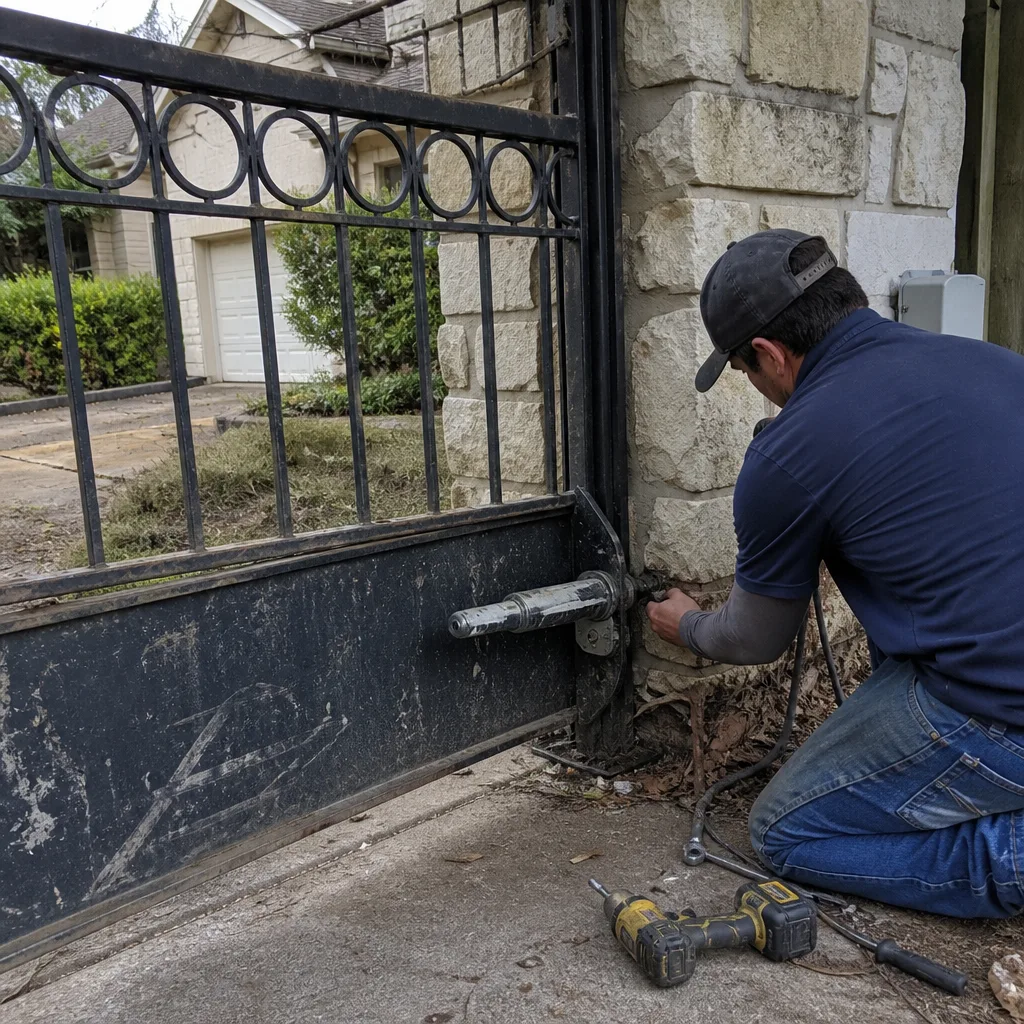 Before
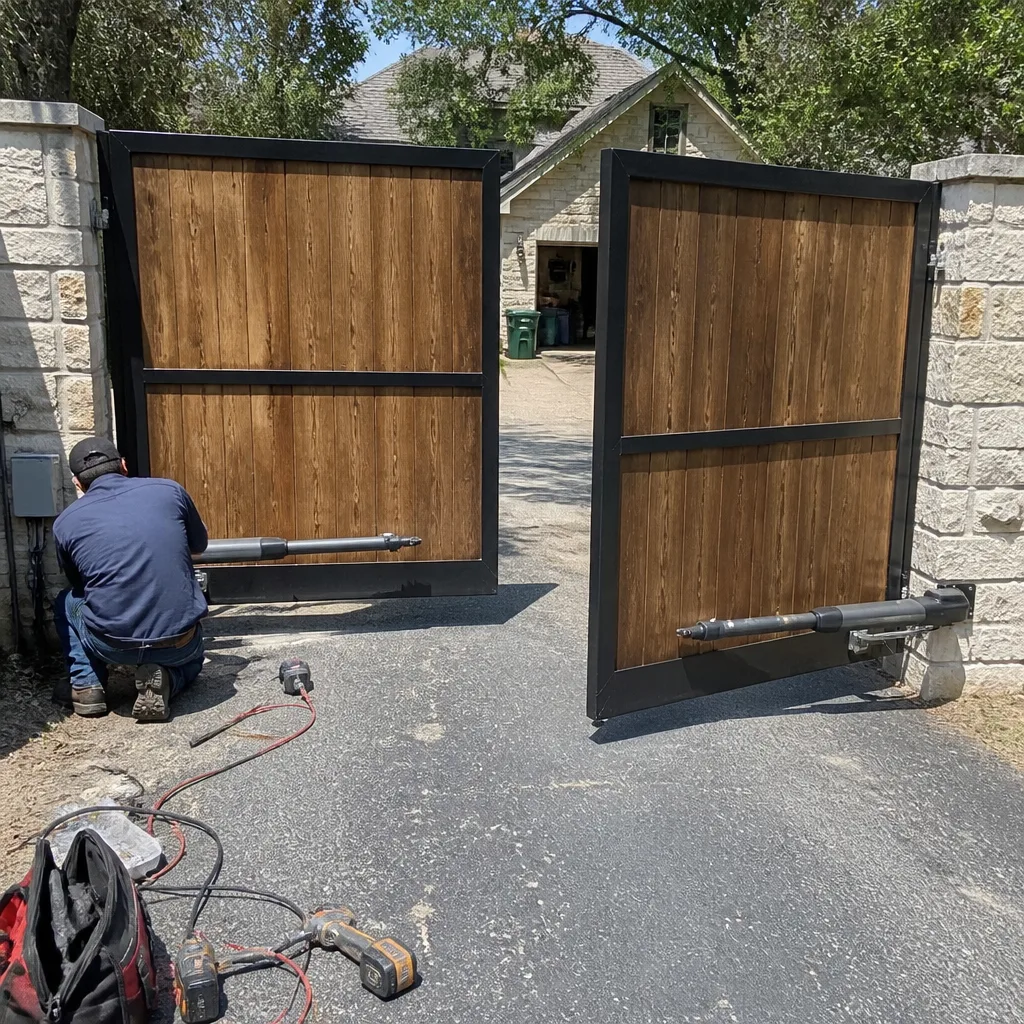 After
After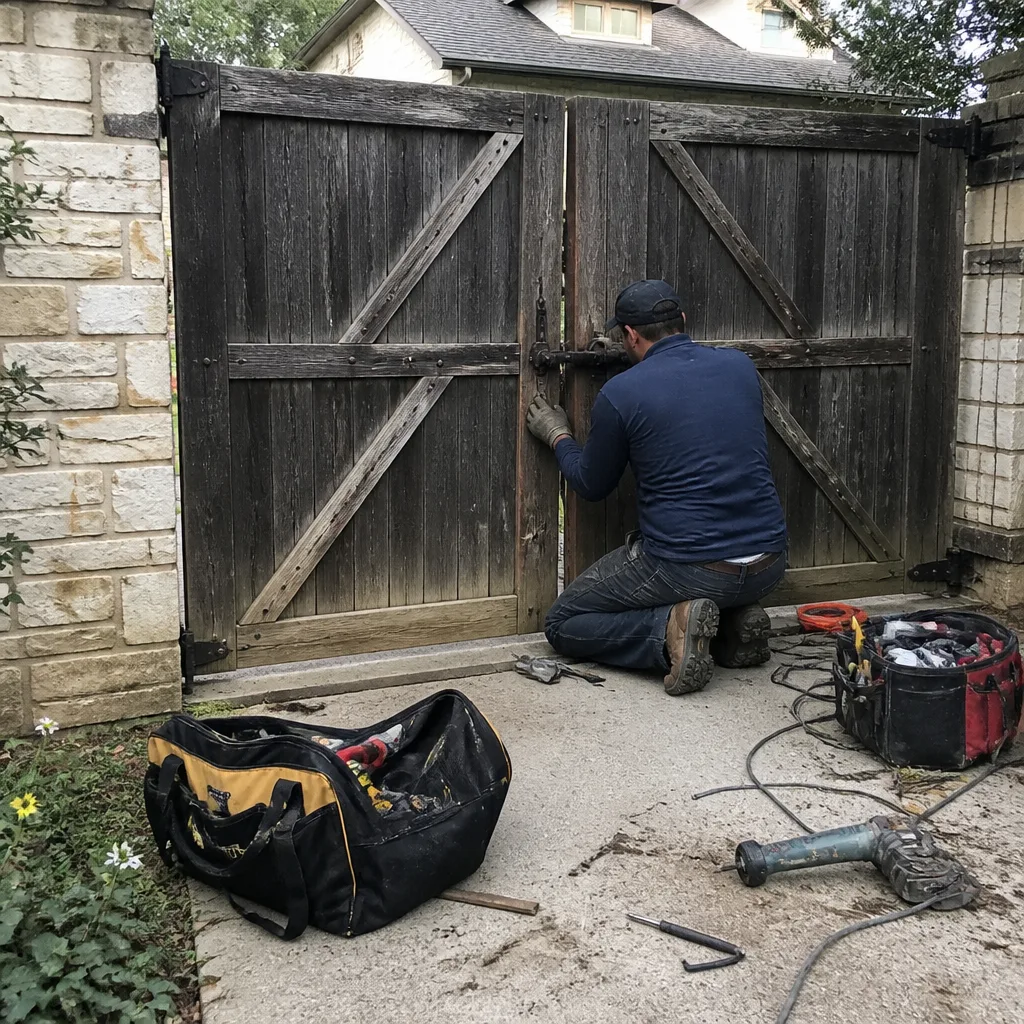 Before
 After
After Before
 After
AfterReplacement Cost & What’s Included
Here’s what BFT access control installation costs in Austin, parts and labor included:
- Receiver replacement: $220 to $390. This is the most common repair. We test the old receiver first to confirm it’s the failure point before we sell you a new one.
- Keypad replacement (OEM or quality aftermarket): $350 to $600 installed. Outdoor-rated housings and weather sealing drive the range.
- Card reader or fob system add-on: $450 to $800, depending on whether we’re adding a standalone reader or integrating it with an existing BFT board.
- Phone-entry or cellular access system: $700 to $1,400. This includes the module, antenna, and programming. LTE-only modules cost more than older 3G units, which are now obsolete and should not be installed in 2026.
- Full access control retrofit with new board, receiver, and keypad: $900 to $1,500. This is the fix for systems that are twenty years old and failing in three places at once.
Every quote is written down before we touch a single bolt. The Kingswell Guarantee on a BFT access control installation covers the parts and our labor for 365 days, and if the repair fails inside that year, we come back and make it right at no charge. That includes the return trip.
DIY or Call Us?
You can safely check a few things yourself: confirm the keypad has power, reseat the wires on the terminal block if they’ve come loose, and test the manual open button to isolate whether the operator itself still runs. That last step saves you money either way, because it tells us whether we’re chasing an access problem or a motor problem.
What we don’t recommend is opening the control board on a live system. BFT boards run 24V control logic but also sit next to 120V or 240V feed lines, and a slipped meter lead across those terminals causes more damage than the part you were trying to diagnose. That’s not puffery; we’ve repaired boards after that exact mistake. If you’re not comfortable testing a live control board, call (254) 280-0629 and we’ll have someone out.
FAQs
Keypads and receivers typically last 7 to 12 years in Austin’s climate, with sun exposure and mounting location being the biggest factors. A keypad on a shaded, south-facing column will outlast the same keypad on an unshaded west-facing wall by several years. Control boards last longer, often 12 to 18 years, unless they’re hit by a power surge or a nearby lightning strike. Call (254) 280-0629 if you’re not sure whether your system is nearing the end of its useful life.
Sometimes, but honestly, it’s rarely worth it. A burned relay or a corroded terminal can be repaired, and we’ll do that when it’s the right call. But a board with heat damage or blown traces is a replacement every time. We’ll show you the board and explain what we’re seeing before we recommend either path. Estimates are free.
A straightforward receiver or keypad swap takes 45 minutes to an hour and a half from arrival to testing. A phone-entry system or a full retrofit with a new board takes two to four hours. We quote the time window on the written estimate, and we test every entry method, remote, keypad code, and safety input before we leave.
Yes. Our Austin trucks carry BFT-compatible receivers, keypads, control boards, and the common wiring harnesses and relays for BFT systems. We also stock parts for LiftMaster, Mighty Mule, and Ghost Controls systems. If you call before noon, there’s a good chance the part you need is already on a truck headed to your neighborhood. Call (254) 280-0629 and describe the symptom. Tell me what it’s doing wrong, and I’ll tell you what it costs to fix it, before I pull out a single tool.
Written by Dean Prescott, Owner, Portcullis Gate Repair Austin at Portcullis Gate Repair Austin, serving Austin and nearby areas.