
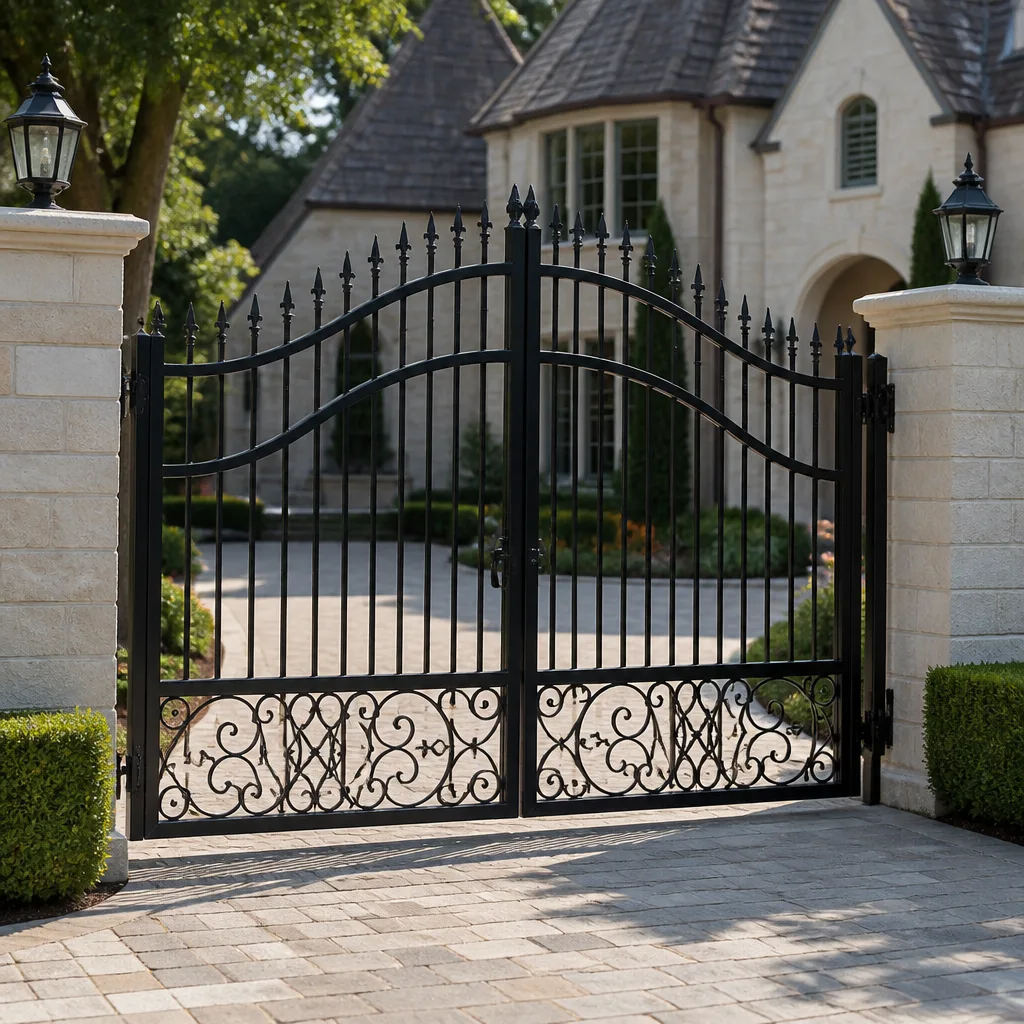
 Wrought iron
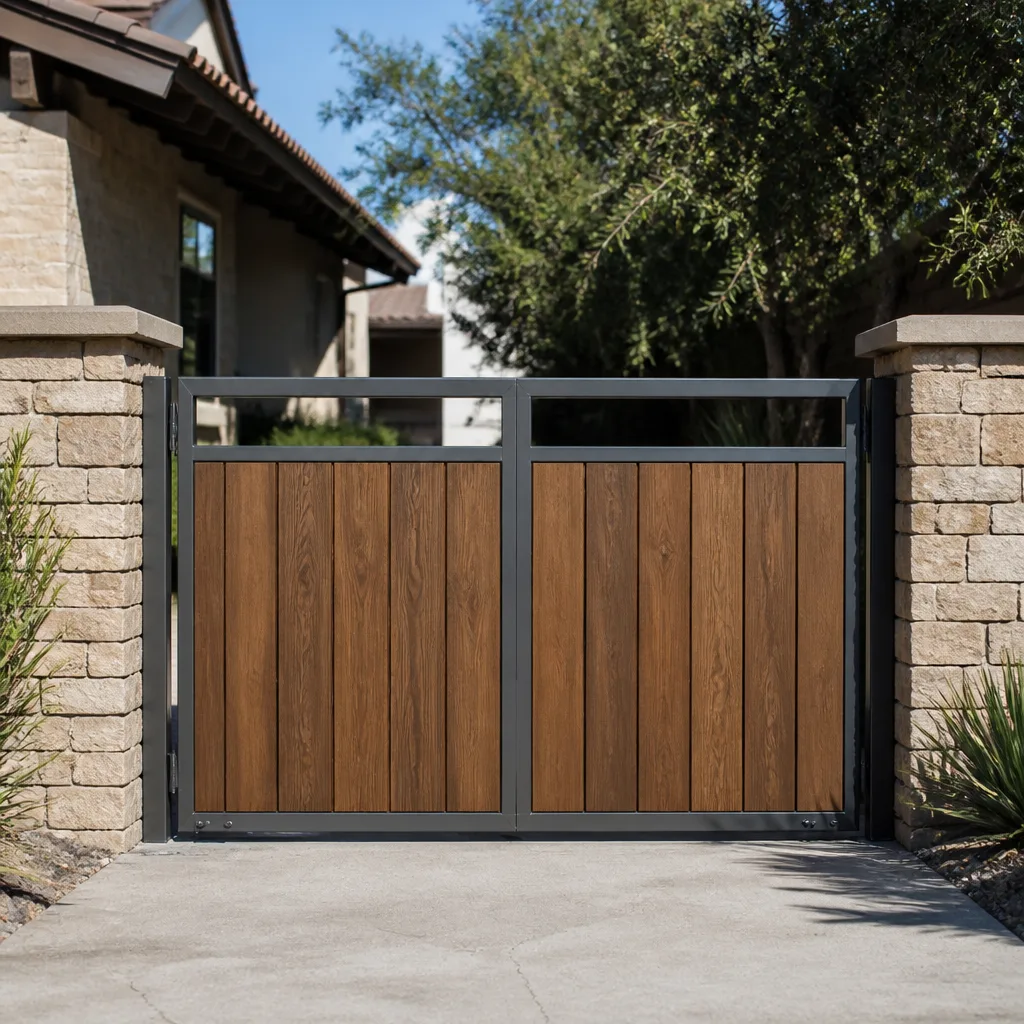 Wood & steel frame
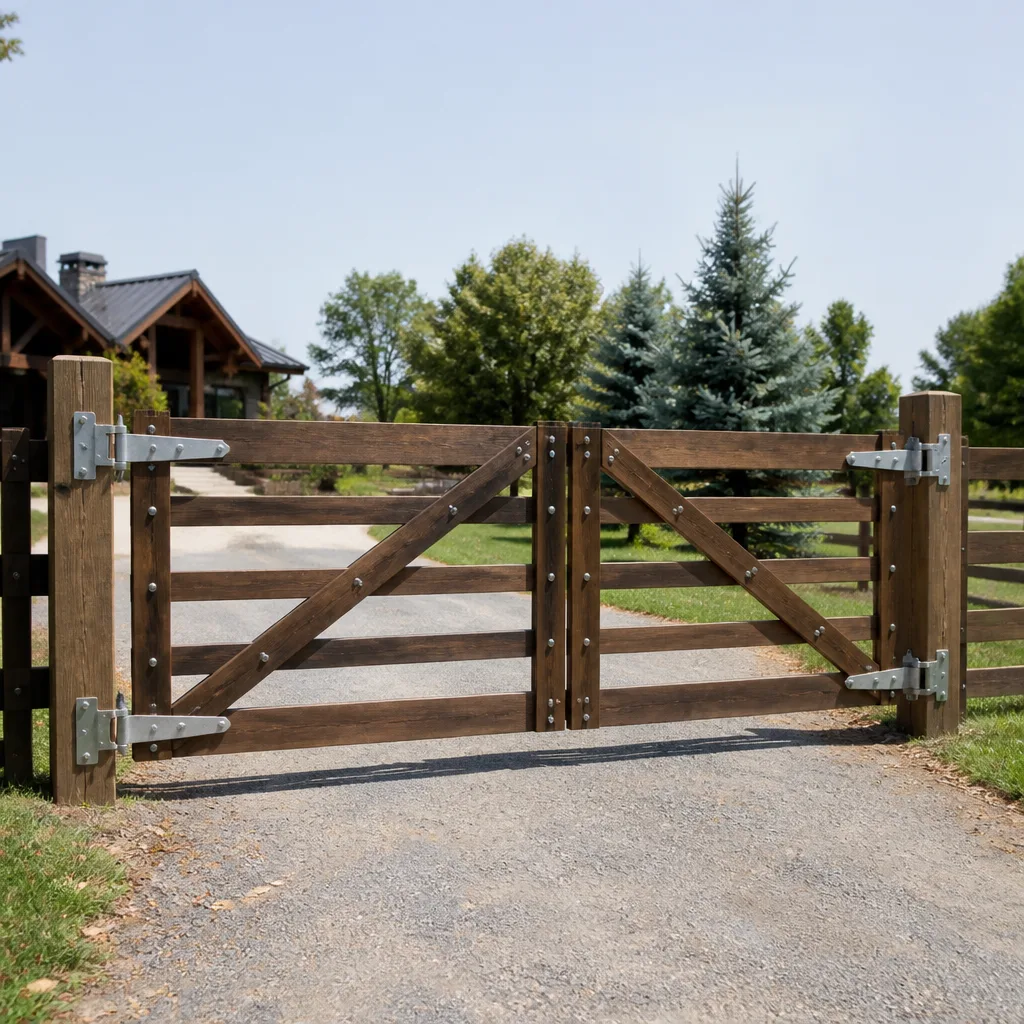 Farm & ranch
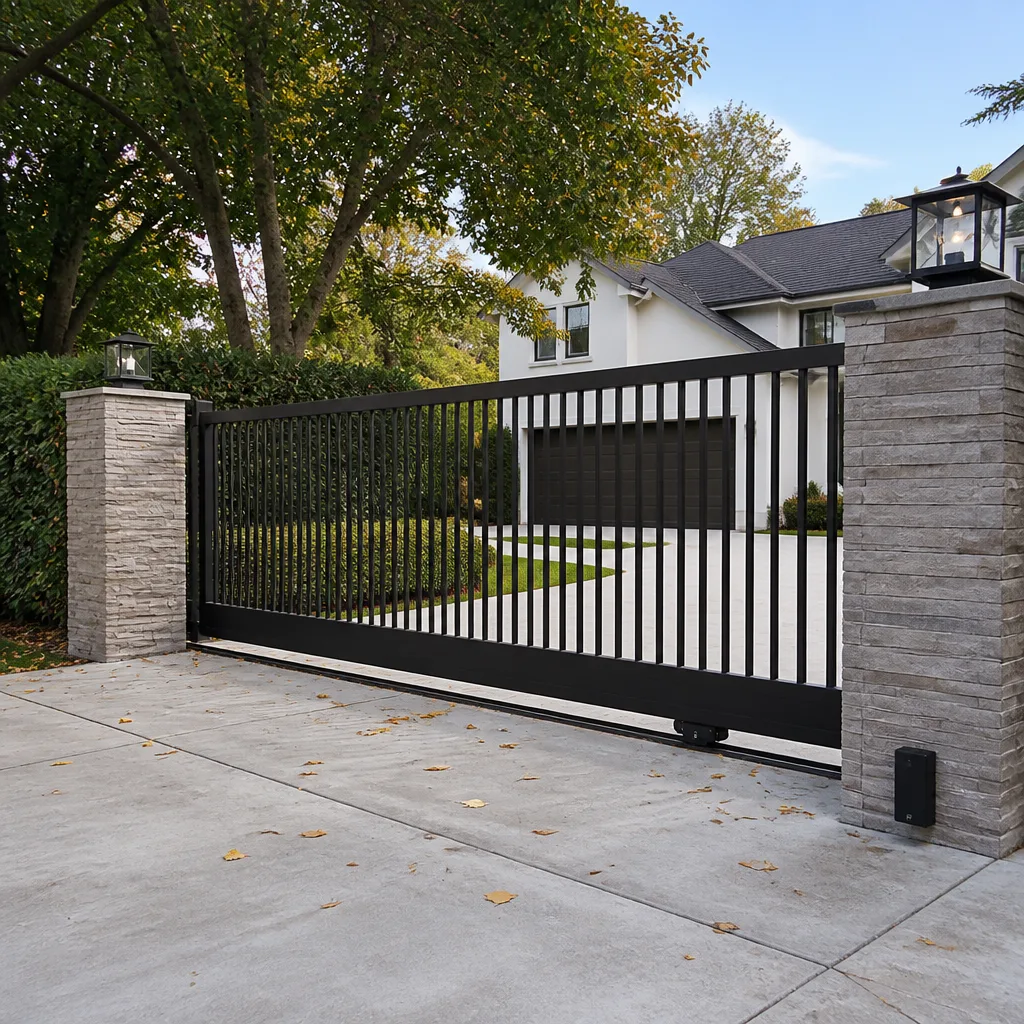 Sliding driveway gates
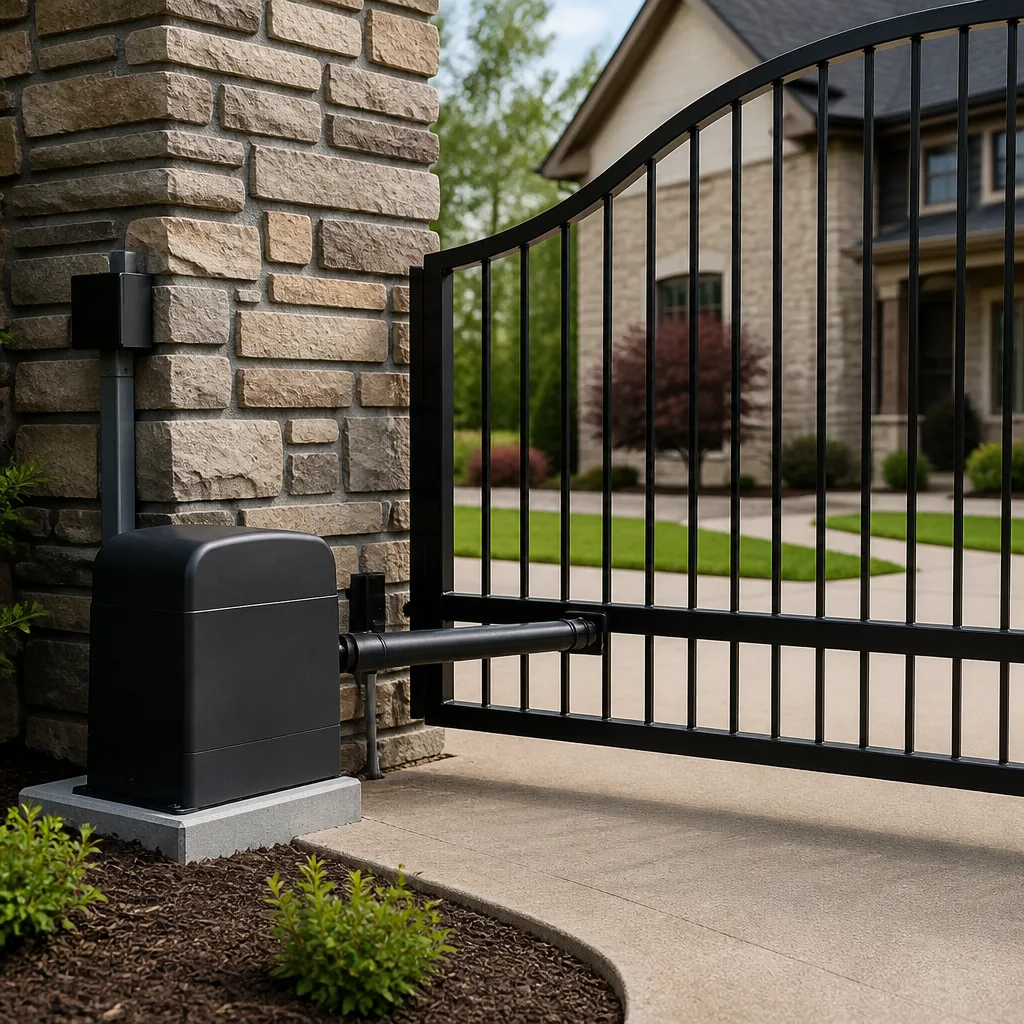 LiftMaster operators
Free on-site gate assessment - hinges, posts, and your LiftMaster or Nice gate operator checked before anything is quoted
The assessment is free and the quote is the invoice.
Get your free estimateLinear Hinge & Roller Replacement: The Austin Owner’s Guide
If your Linear gate has started sagging, scraping, or binding, you’re likely looking at worn hinges or shot rollers. We stock Linear-compatible hinge and roller replacement parts on our trucks and install them across Austin every week, with most jobs running $220 – $480 parts and labor depending on gate size and how many points need replacing. You’ll notice the problem before you see it: the gate drags at the latch post, makes a grinding sound mid-swing, or sits visibly tilted in the closed position.
Hinges and rollers are the load-bearing parts of a swing or slide gate. When they wear, the entire weight of the gate shifts onto the operator, the posts, and the latch. That’s when the motor starts laboring and the limit switches start acting up. On a Linear system, worn hardware can trip the obstruction sensor and leave the gate parked halfway open. Here’s how we handle it.
Which Linear Models This Applies To
This service covers Linear’s swing and slide gate lines: the LRA, LRG, and APeX series operators paired with standard residential and light-commercial gates. If your operator says Linear on the cover and your gate is steel, aluminum, or ornamental iron, we can match the hardware.
Identifying the right hinge or roller comes down to two things: the hinge leaf size (measured across the barrel, usually 3-inch to 6-inch) and the roller diameter (4-inch and 6-inch are the most common on Linear-installed gates here in Austin). If you have the original Linear installation manual, there’s usually a parts schedule in the back with the hinge and roller spec called out. No manual? No problem. We take measurements on site and match from the stock we carry.
One compatibility note worth knowing: Linear-branded slide gates used in Austin subdivisions frequently ship with 4-inch steel rollers with shielded bearings. A generic 4-inch roller from a big-box store will physically fit, but the bearing seals are not rated for our dust and heat cycles. They fail inside two summers. We stock the sealed-bearing version and the heavy-duty 6-inch option for gates over 14 feet.
Portcullis Gate Repair Austin is an independent service provider. We are not affiliated with Linear or Nortek, but we service their equipment daily.
Styles & brands we work with
Signs Your Linear Hinge & Roller Replacement Is Failing
- The gate sags at the latch end. This is almost always the top hinge wearing an oval into its barrel, not the post moving. The gate’s weight pulls down, the hinge pin rides the bottom of the worn pivot, and the latch end drops a half-inch or more. You’ll see scrape marks on the latch post.
- You hear grinding or clicking when the gate moves. Roller bearings go before the roller wheel does. The sealed bearings get dry, then they get gritty, then the wheel starts sliding instead of rolling. Grinding is the sound of a flat-spotted roller dragging on the track.
- The gate shudders or jerks mid-swing. A worn hinge creates intermittent binding as the gate swings through its arc. The operator compensates by surging, which puts strain on the Linear control board and can burn out the motor capacitor over time.
- The operator stops and reverses for no apparent reason. Linear operators read resistance through the obstruction sensor. Binding hardware looks like an obstruction to the board. The gate has nothing touching it, but the hardware is fighting itself.
- Visible rust staining below the hinge or roller. In Austin’s humidity cycles, unprotected steel hardware sweats. Rust-colored streaks running down from the hinge barrel or roller axle mean the metal is shedding material and the bearing surface is compromised.
See the difference
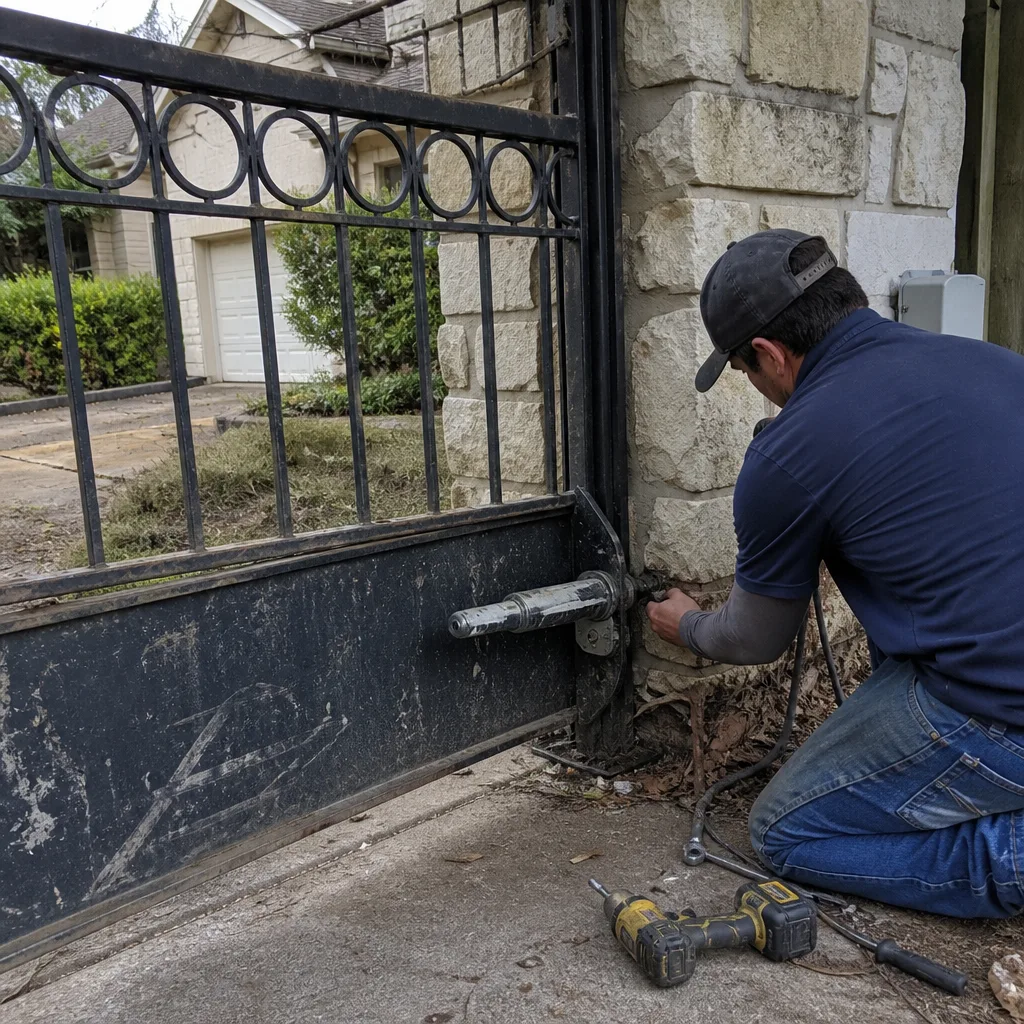 Before
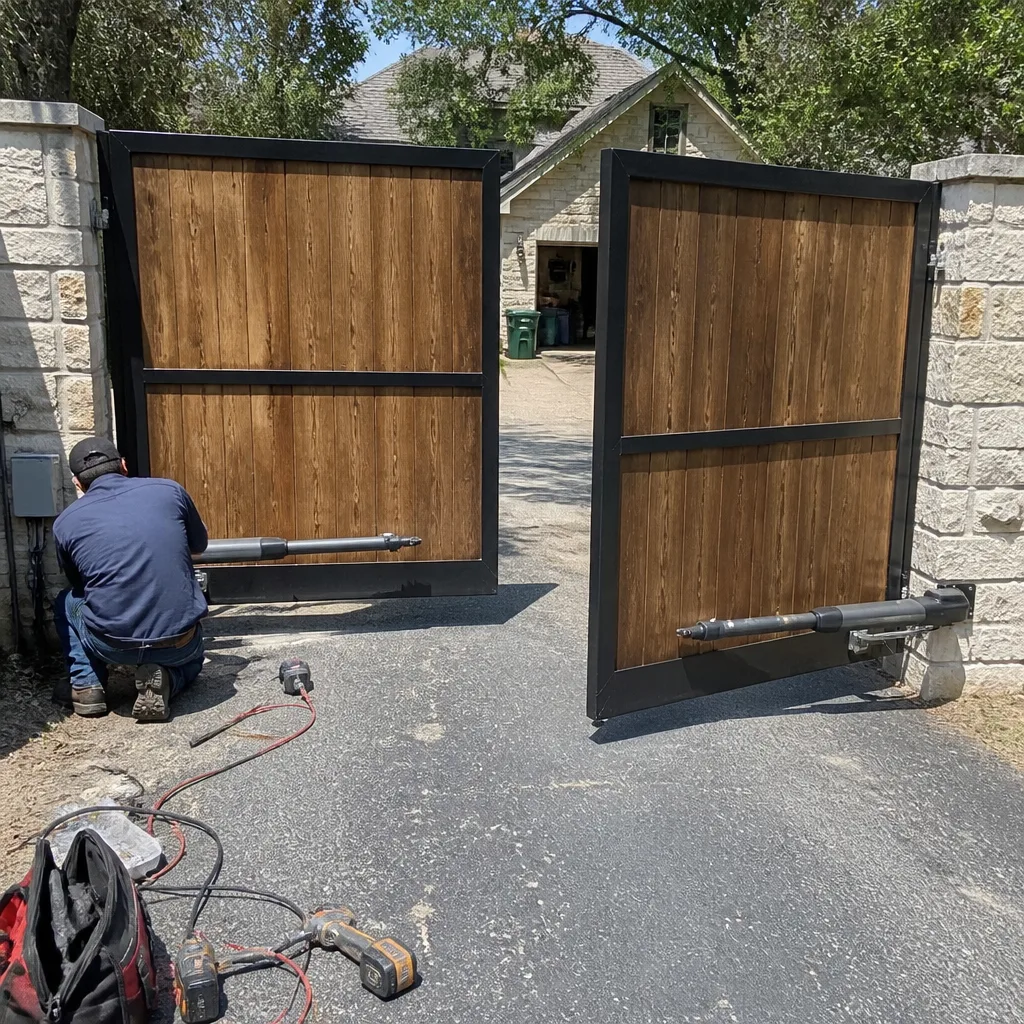 After
After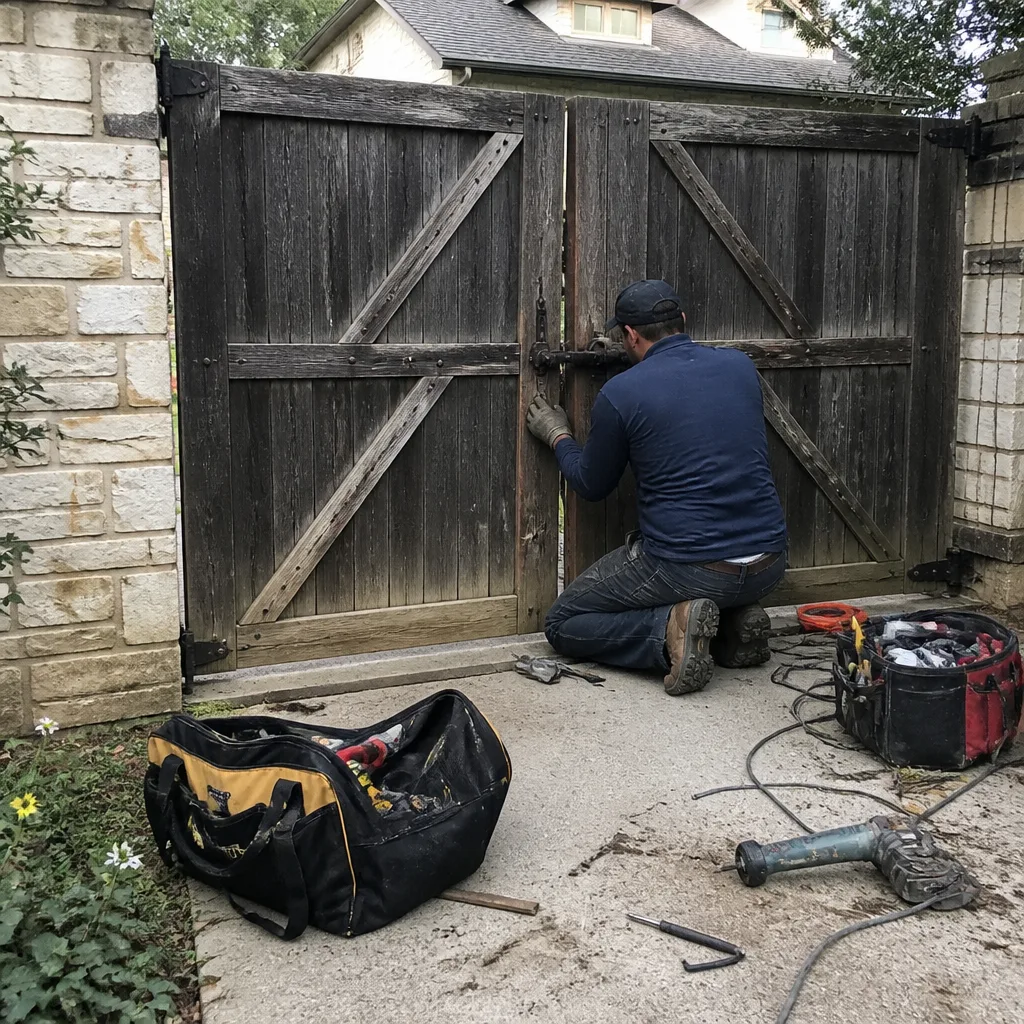 Before
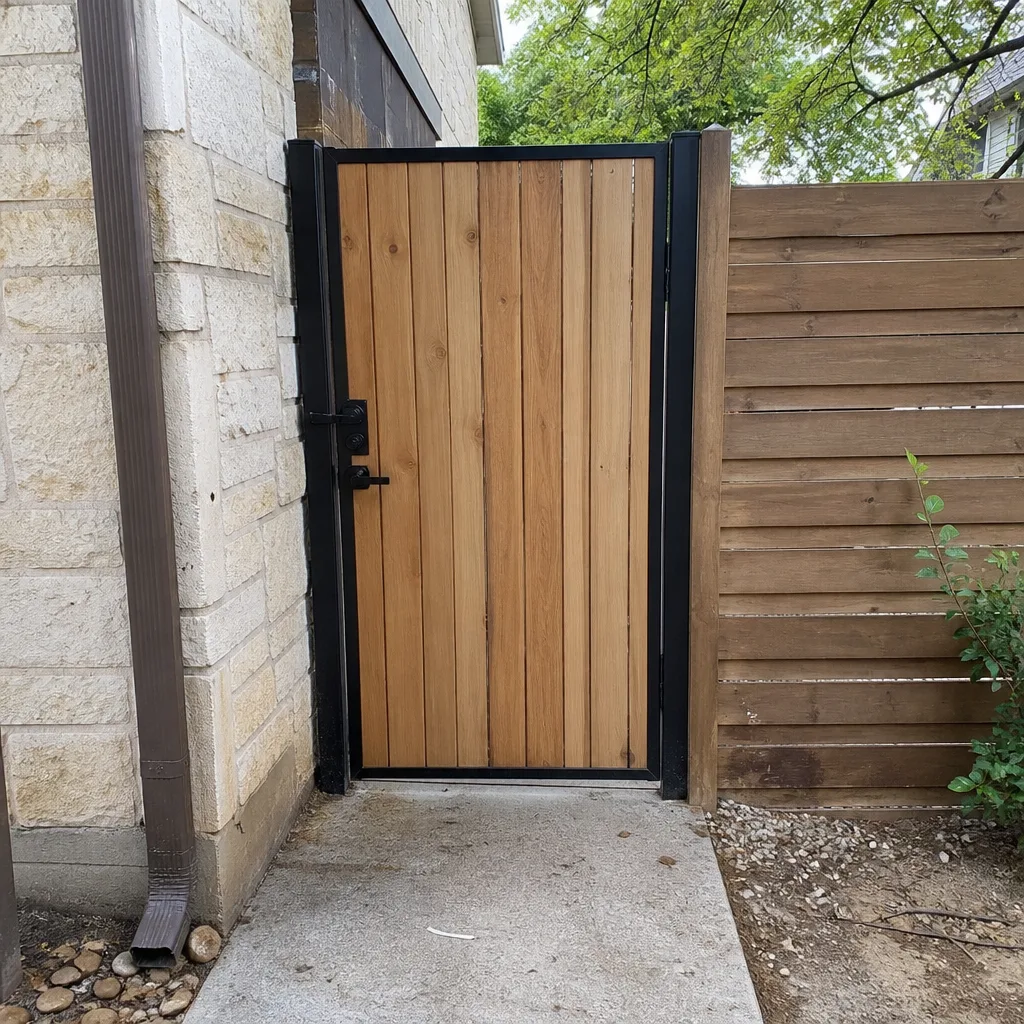 After
After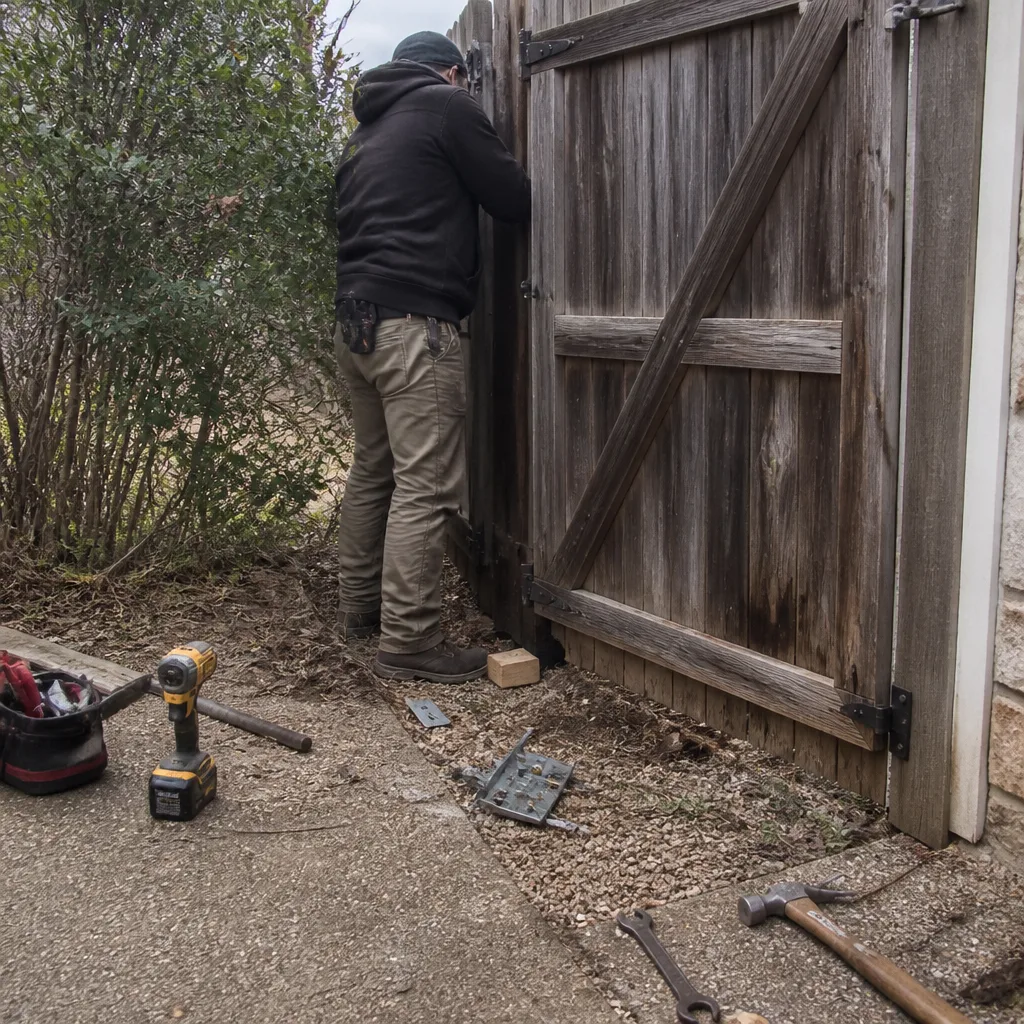 Before
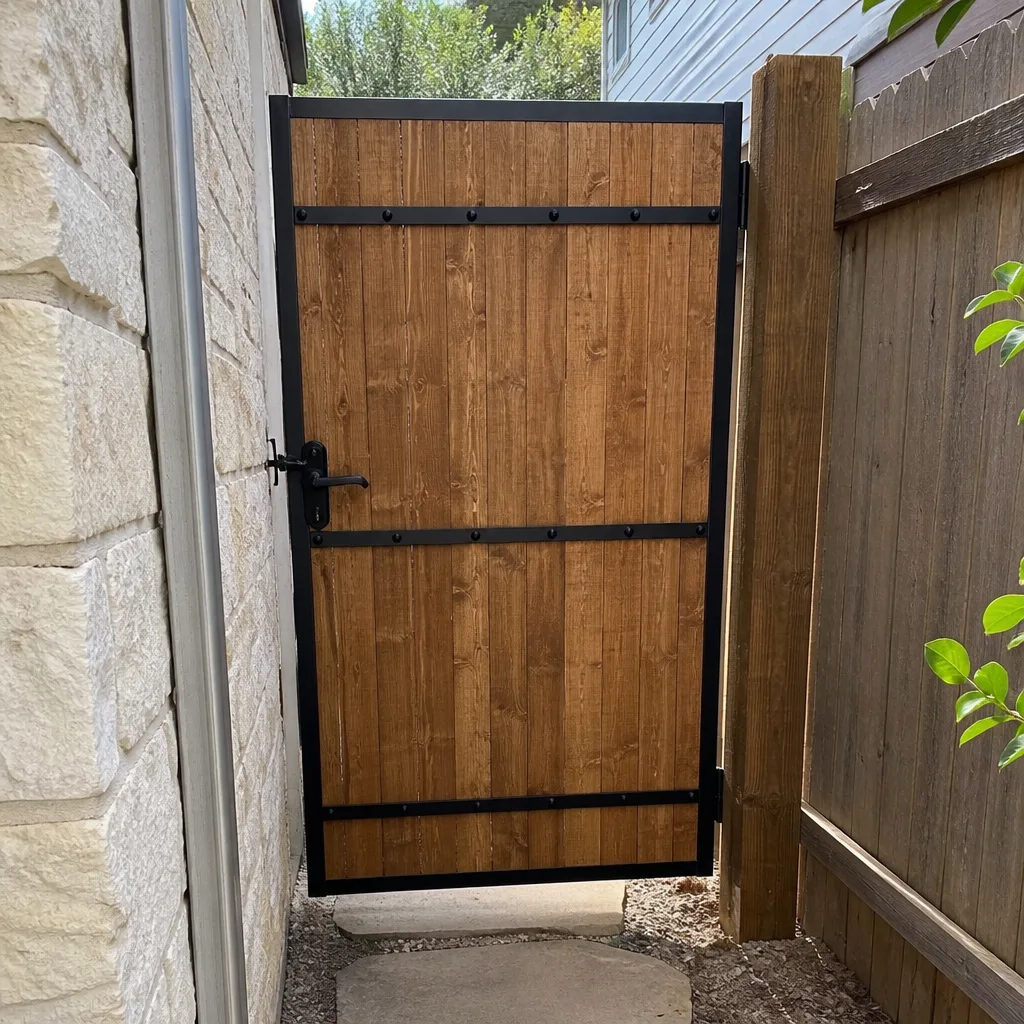 After
AfterReplacement Cost & What’s Included
Here’s the honest picture for Austin. A single-hinge replacement on a standard residential walk-through gate typically runs $220 – $280. A full hardware refresh on a 12- to 16-foot driveway swing gate, meaning both hinges and both rollers, usually lands between $380 – $480. Slide gates on the larger end, with a heavier roller set, can reach $550 if we’re replacing the track wheels and the guide rollers together.
The range comes down to gate weight, whether we’re doing one component or the whole set, and whether the gate needs to come off its mounts for the repair. On heavy gates, we bring a gate jack and the job takes longer, but the price is the same written number before we start.
Every replacement includes the parts, the labor, the trip, and alignment of the gate after the hardware goes in. We set the gate back to level, verify the Linear operator’s travel limits still track correctly, and test the full open-close cycle before we call it done. The Kingswell Guarantee applies to every hinge and roller job: a written price before any work starts, a real arrival window, a clean job site, and a written guarantee on the repair. If it fails inside 365 days, we come back and fix it at no charge. That’s the 365-Day Done Right Promise, printed on the invoice.
DIY or Call Us?
You can safely inspect your Linear gate hardware without touching a tool. Look for visible sag at the latch end, check the roller wheels for flat spots, and watch the gate move through its full arc once with the operator in manual mode. That tells you which component is failing and whether it’s one hinge or a set.
What you should not do is unbolt a hinge on a gate that’s still standing. A 300-pound gate carries real tension, and when that last hinge comes off, the gate drops and it doesn’t drop nicely. We’ve seen fingers pinned and gates landed on truck hoods. Replacing rollers on a slide gate is the same story: the gate has to be lifted or blocked correctly before the roller comes out. This is the part where the Kingswell price-earned equation works in your favor. Call (254) 280-0629 and we’ll get it done without the trip to urgent care.
FAQs
Expect 5 to 8 years from original Linear hinges and rollers in Austin’s climate, less if the gate is unshaded and faces west. Our heat and humidity cycles rust unprotected steel and dry out the bearing grease faster than the manufacturer’s national average. Sealed-bearing replacements typically add 2 to 3 years over the original parts.
Not reliably. Once a hinge barrel is ovaled, welding in a new bushing or driving an oversized pin is a temporary fix that fails within months. Replacement is cheaper over even one year. We’ll tell you straight if the hinge can limp along, but we won’t charge you to weld something that should be swapped.
Most single-hinge jobs take 45 to 90 minutes on site, including re-leveling the gate and testing the operator. A full hardware refresh on a double-leaf driveway gate can run 2 to 3 hours. We give you a real arrival window when you book, not a four-hour spread.
Yes. Our Austin trucks carry 3-inch and 6-inch hinge sets, 4-inch and 6-inch sealed-bearing rollers, and the heavy-duty guide rollers for Linear slide gates, plus matching hardware in both steel and stainless. If it’s a less common size, we source it and return within a few business days. Call (254) 280-0629 and describe your gate to us, and we’ll bring the right part the first trip.
Written by Dean Prescott, Owner, Portcullis Gate Repair Austin at Portcullis Gate Repair Austin, serving Austin and nearby areas.