
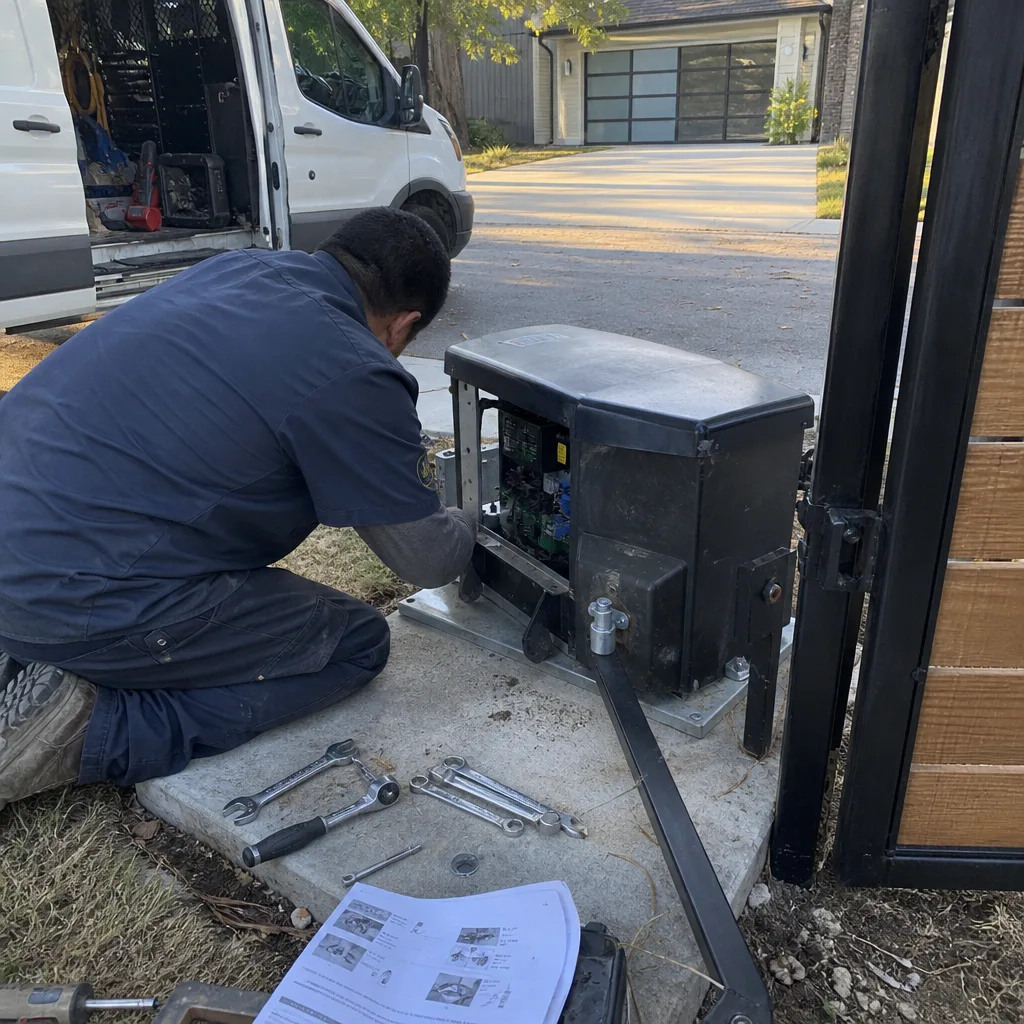
Last updated October 16, 2026
 Wrought iron
 Wood & steel frame
 Farm & ranch
 Sliding driveway gates
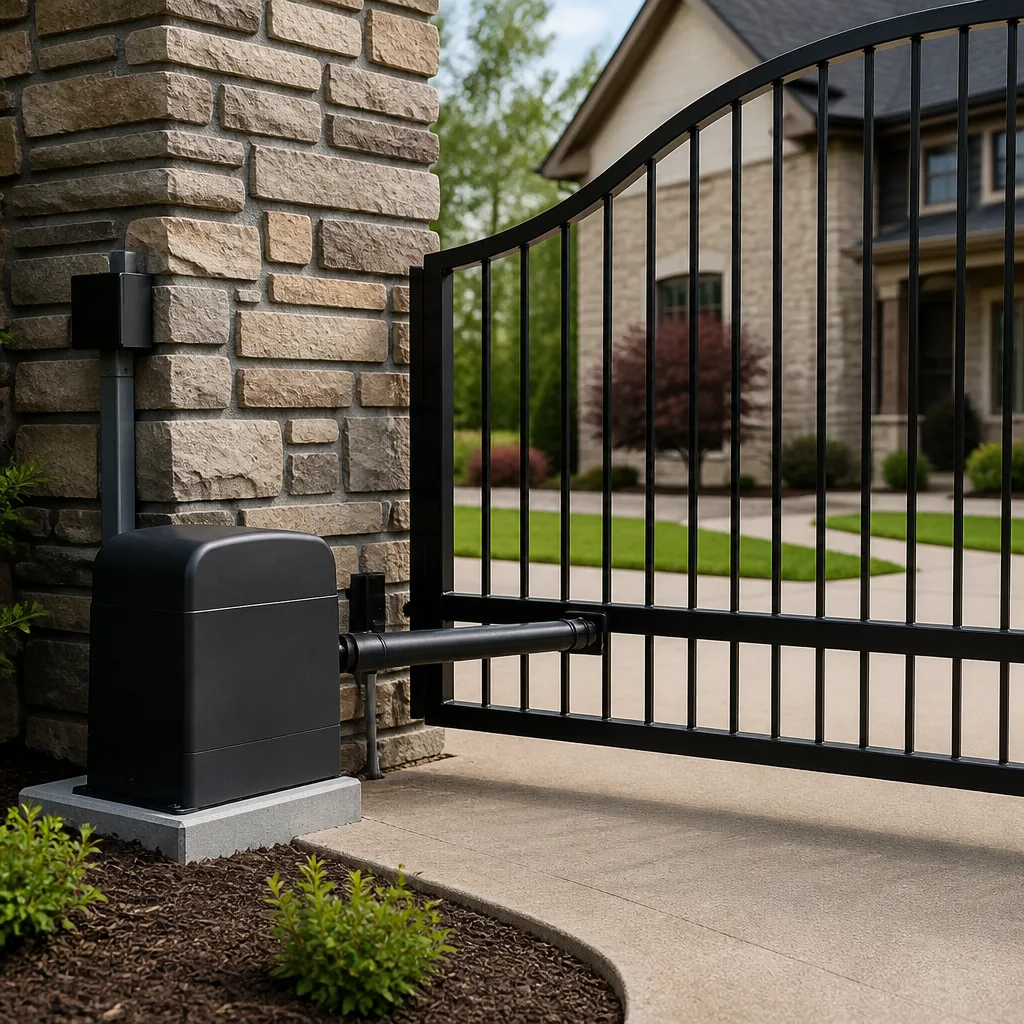 LiftMaster operators
Free on-site gate assessment - hinges, posts, and your LiftMaster or Nice gate operator checked before anything is quoted
The assessment is free and the quote is the invoice.
Get your free estimateSeasonal Gate Repair Care for Austin: Year-Round Homeowner’s Guide
Austin has hit consecutive 100°F days in June that expand a steel driveway gate’s frame enough to bind against its own latch. The same gate works perfectly fine in March at 65°F, which makes the problem invisible to any technician who didn’t see it happen. This guide covers what actually goes wrong with gates in Austin across the year, when it happens, and what you can do about it before a stuck gate turns into a security problem or a repair bill that our Gate Repair services could have helped you avoid.
Styles & brands we work with
Quick Answer
Seasonal gate care in Austin means matching maintenance tasks to three real stress periods: cedar season (January – February), the heat plateau (June – September), and freeze windows (December and February). Each season stresses a different part of the gate: hinges and sensors in cedar season, frames and operators during extreme heat, and batteries and limit switches during freezes. A simple seasonal checklist, done twice a year, prevents most emergency gate repairs in Austin.
Table of Contents
- Cedar Season (January – February): Pollen and Hinge Protocol
- Spring (March – May): Post Plumb and Limit Switch Recalibration
- Heat Plateau (June – September): Thermal Expansion by Gate Material
- Fall (October – November): Drainage and Soil Contraction
- Freeze Windows (December & February): Batteries and Freeze Sensors
- The Twice-Yearly Austin Gate Care Checklist
- Common Mistakes to Avoid
- When to Call a Professional
- Frequently Asked Questions
- The Bottom Line
Cedar Season (January – February): Pollen and Hinge Protocol
Ask any Austin homeowner what January means and they’ll say cedar fever. Mountain cedar pollen blows in from the Hill Country starting in late December, peaks in January, and leaves a fine yellow-green film on every outdoor surface. For your gate, that film lands directly on hinges, track wheels, and the operator’s safety sensor lenses. Cedar pollen is oily and fine enough to work into hinge pin clearances. When it mixes with winter dew, it forms a paste that accelerates wear on the hinge bushing, the nylon or bronze sleeve inside the hinge barrel.
Hinges are the most commonly ignored component on any gate system. Most homeowners check the gate leaf, the operator arm, and maybe the keypad. Few notice that a hinge bushing has worn down until the gate starts dragging at the latch side or the top corner dips visibly below level. In Austin, January is the month to inspect hinges before the pollen load peaks.
January Hinge Inspection Protocol
- Visual check first. Look at the top of each hinge pin. If the pin sits at an angle or the gate leaf has dropped more than a quarter inch at the latch side, the bushing is wearing.
- Lift test. With the gate in the closed position, try to lift the latch side by hand. A gate with healthy hinges should move no more than a slight fraction. A quarter-inch of play means the bushing should be replaced soon.
- Listen. Open and close the gate by hand. A dry hinge creaks; a worn hinge makes a sharper, almost metallic click at the end of its travel. Squeaks get addressed with lubrication; clicks mean parts are reaching the end of service life.
- Clear the pollen. Wipe hinge barrels and sensor lenses with a dry microfiber cloth. Do not use water on sensor lenses in January, as it mixes with pollen and smears it across the lens face. Dry removal first, then a damp cloth if needed.
Safety sensors deserve extra attention in cedar season. The photo eye, the small transmitter and receiver mounted low on either side of the gate opening, uses an infrared beam to detect obstructions. Pollen film on a photo eye lens reduces beam strength. The operator reads a weak beam as an obstruction and either refuses to close or reverses mid-cycle. In our experience, January service calls in Austin often turn out to be pollen-coated photo eyes rather than failed operators. We service nine operator brands including Linear, Viking, and Ghost Controls, and the symptom pattern is the same across all of them: the gate starts behaving erratically during peak pollen, then works fine once the lenses are cleaned.
If you notice your gate hesitating, stopping halfway, or reversing for no visible reason in January or early February, start by checking the photo eye lenses. A five-minute wipe often fixes the behavior without a service call. If the problem continues, something else is at work and it is worth having a technician look before the heat season adds a second set of variables. Our Gate Repair in Austin page covers how we diagnose intermittent gate faults, including pollen-related sensor issues.
Spring (March – May): Post Plumb and Limit Switch Recalibration
March in Austin usually brings the first real spring rains after a relatively dry winter. That moisture works its way into the soil around gate posts. Austin sits on a mix of clay, limestone, and the notorious Austin chalk formation, with caliche layers that expand when wet and contract dramatically when dry. A gate post that was plumb, meaning perfectly vertical, in October may lean by half an inch come March. Half an inch at the post translates to a full inch or more of sag at the latch end of a wide gate.
Spring is the right time to check post plumb and recalibrate the operator’s limit switches. These two tasks address the two most common springtime gate failures in Austin: posts shifting due to ground movement and operators that no longer stop the gate at the correct position.
Post Plumb Check
Use a simple level against the post face. Check both the plane of the gate travel (front-to-back) and the perpendicular plane (side-to-side). Mark the top of each post with a pencil line and re-check in a month. If the line moves, the post is drifting and the soil is settling. A post that is moving needs more than a shim; it needs the soil around its base stabilized, often with additional concrete or a gravel drainage column. Ignoring a drifting post in spring guarantees a gate that binds by midsummer, when the same post moves again in the opposite direction as the soil dries.
Limit Switch Recalibration
The limit switch tells the operator where to stop the gate at the fully open and fully closed positions. On most residential operators, these are either mechanical switches inside the operator housing or magnetic sensors mounted on the gate frame. After a winter of ground movement, even a fraction of an inch of post shift changes where the gate stops. Symptoms include the gate stopping short of the latch, over-traveling past the closed position, or the operator continuing to run against the stop for a second after the gate has stopped. That last symptom means the operator is pushing against a bound gate, which burns out motors and strips gears much faster than normal operation.
Recalibrating limit switches is straightforward on most systems and involves moving the switch positions or resetting the magnetic stops to match the gate’s current travel. But it has to be done with the gate moving under power, and it has to account for the fact that the gate will shift again in the summer heat. We typically calibrate limit switches twice a year in Austin: once in March after the winter movement, and again in September after the peak heat cycle. Our Electric Gate Repair in Austin page explains how we handle limit switch work and what it costs on the common operator brands.
Heat Plateau (June – September): Thermal Expansion by Gate Material
Austin’s heat plateau runs from early June through mid-September, when daytime highs settle into the mid-90s and triple-digit days arrive in clusters. What most homeowners don’t realize is that this heat does not affect every gate the same way. Steel, aluminum, and wood gates each respond differently to a 40-degree temperature swing between night and afternoon, and the response determines what kind of binding or misalignment you are likely to see.
Steel Gates
Steel expands roughly 0.0000065 inches per inch of length per degree Fahrenheit. On a 14-foot steel gate, a 35-degree rise from morning to afternoon means the gate leaf grows by just under four hundredths of an inch. That sounds trivial, but the latch gap and the clearance between the gate and the post are often set at an eighth of an inch or less. Add in the fact that the hinge side of the gate is in shade while the latch side sits in direct sun, and you get differential expansion: the latch side grows while the hinge side stays closer to its morning dimension. The gate binds against the latch post or its own keeper, and the operator stalls.
We’ve seen this in neighborhoods across Austin every June: a gate that worked perfectly at 7 a.m. will not close at 3 p.m., then works again after sunset. The fix is not operator motor replacement; it is adjusting the latch clearance and the limit switch positions to accommodate summer expansion, as detailed in The Complete Guide to Gate Repair in Austin. On steel gates, we often set the closed limit slightly short of the mechanical stop during summer months, leaving the gate a fraction open at the latch so the steel has room to grow. The trade-off is a slightly wider gap at the latch during cooler hours, but that gap is far less of a security issue than a gate that fails to close at all when the sun is on it.
Aluminum Gates
Aluminum expands at roughly twice the rate of steel. Residential aluminum gates in Austin, especially the popular ornamental styles with welded pickets, develop visible heat-related bowing. Because aluminum is more flexible than steel and often fabricated in thinner sections, the gate leaf bows outward in the sun and returns at night. A bowed gate puts uneven load on the hinge bearings and can cause the operator to work harder than it should. The most common heat-related failure on aluminum gates is not binding but hinge bearing wear accelerated by repeated bowing cycles. Homeowners in western Austin neighborhoods with full afternoon sun exposure see this pattern first.
Wood Gates
Wood does not expand with heat, but it does expand with humidity and contract when it is dry. Austin’s summers are dry after June, and cedar and redwood gates lose moisture quickly. That shrinkage causes gate frames to loosen at the corners, pickets to shift, and latch bolts to fall out of alignment. A wood gate that closed perfectly in May may sag and scrape the ground by August, not because the posts moved but because the wood itself shrank and the frame joints opened up.
What to Adjust in the Heat Plateau
- Latch clearance on steel gates. Back the latch keeper off slightly so the gate can close without hitting the post at peak temperature.
- Hinge bolts on wood gates. Check and tighten the frame bolts at the corners. In most cases the bolts have loosened because the wood shrank around them, not because the gate was built wrong.
- Operator force settings. If the operator has an obstruction sensitivity or force adjustment, heat season is when it may need a slight increase to push through the added friction of a thermally expanding gate. But do not overcorrect: setting force too high defeats the safety reversal function.
- Shade considerations. A gate with no afternoon shade will always expand more than one that sits in tree shade or on the north side of the house. If you are planning a new gate, Gate Installation in Austin covers material selection and site considerations that reduce heat-related binding from day one.
Fall (October – November): Drainage and Soil Contraction
By October, Austin’s summer heat has baked the soil hard. The caliche layer, common in much of the Hill Country and the western half of Austin, contracts sharply when dry. That contraction creates gaps around gate post footings, and those gaps become channels for water when the fall rains arrive. The cycle is predictable: dry fall creates the gap, rain fills the gap, the next freeze expands the water, and the post shifts.
Fall is the time to clear drainage channels around your gate posts. Caliche is deceptive because it looks like solid rock when dry but turns to soft clay when wet. A post set in caliche that has cracked and dried out is sitting in a bowl of loose material, not a stable footing. Clearing a simple drainage path around the base of each post keeps water from pooling against the concrete and migrating down into the soil around the footing.
Drainage Clearing Steps
- Clear debris. Remove leaves, grass clippings, and accumulated soil from the base of each post. In Austin, live oak leaves are the primary debris source in fall and early winter.
- Check the concrete collar. Most gate posts sit in a concrete collar at grade. Look for cracks in the collar. Hairline cracks are normal; cracks wide enough to slide a dime into are a sign the footing has already moved.
- Create a drainage path. Grade the soil away from the post so water runs outward, not toward the footing. A one-inch drop over the first six inches away from the post is enough.
- Consider gravel. A two-inch layer of pea gravel around the post base improves drainage and slows soil contraction in summer.
Fall is also the right time to inspect the gate’s bottom rail clearance. A gate that cleared the ground by two inches in spring may clear by only an inch after the soil shifts. If the gate is dragging, address the soil level before the operator has to work harder. Dragging gates in Austin typically fail at the operator gearbox first, which is a more expensive repair than a simple soil adjustment.
We serve the entire Austin area from the Portcullis Gate Repair Austin home base, and our technicians see the same caliche-related post movement in Circle C, Steiner Ranch, and the neighborhoods along the Balcones Escarpment. The soil type does not care about the neighborhood line; it behaves the same everywhere the caliche runs shallow.
Freeze Windows (December & February): Batteries and Freeze Sensors
Austin freezes are infrequent, but when they come they are disruptive. The city’s gate systems are not built for sustained cold the way gates in North Texas or the Midwest are. Most residential operators in Austin are rated for operation down to around -4°F at the motor, but the battery backups, circuit boards, and safety edges behave differently in cold weather, and a hard freeze after a wet fall is the perfect setup for component failure.
Battery Backup Testing
If your operator has a battery backup, December is the month to test it. Disconnect the operator from its power source, usually by flipping the dedicated circuit breaker, and cycle the gate open and closed. A healthy battery should move the gate at full speed or close to it. A battery that moves the gate slowly, or only opens it once before dying, is near the end of its life. Batteries in Austin operators typically last three to five years, but the heat of summer shortens that lifespan because high temperatures degrade lead-acid and gel-cell chemistry faster than cold does.
During the February 2021 freeze event, we saw a clear pattern across Austin: operators with weak batteries failed within the first day of power loss, while operators with recently tested batteries continued cycling for two to three days. The freeze itself does not kill the battery; the prior summer’s heat does. The freeze just reveals it.
Freeze Sensor and Limit Switch Behavior
Many operators include an internal freeze sensor or cold-weather logic that changes motor behavior below freezing. When the sensor detects freezing conditions, the operator may run slower, pause at the limits, or refuse to move until warmed. This is design behavior, not failure, but it surprises homeowners who expect the gate to work identically in all weather. If the gate moves slowly on a cold morning and speeds up by afternoon, the freeze sensor is working as intended.
What does fail in a hard freeze is the safety edge, the pressure-sensitive strip mounted along the gate’s leading edge. When the edge material gets cold, it stiffens. A stiff safety edge can send false obstruction signals to the operator, causing the gate to reverse or stop mid-cycle. The fix is usually a replacement edge made from cold-rated rubber, but the symptom is easy to misdiagnose as an operator fault. If your gate misbehaves only when temperatures drop below freezing, the safety edge is the first component to check, not the operator.
What to Do If the Operator Locks Up After a Hard Freeze
- Check the breaker. Confirm the operator has power. Freeze events often trip breakers when heat tape or other cold-weather loads draw on the same circuit.
- Release the operator. Most operators have a manual release lever or key that disconnects the gate from the drive mechanism. Release it and try moving the gate by hand. If the gate moves freely, the problem is in the operator or its electrical supply, not the gate itself.
- Check for ice at the track or hinges. If the gate is frozen to the ground or ice has formed in the hinge barrels, do not force the operator. Let the ice melt or chip it away carefully before restoring power.
- Call if the reset fails. If the operator refuses to respond after confirming power and releasing the mechanism, call a technician. Continuing to reset the breaker or forcing the operator can damage the control board. Portcullis Gate Repair Austin answers calls 24/7 with a live person, including during freeze events.
The Twice-Yearly Austin Gate Care Checklist
Two checks per year, timed to Austin’s actual weather, cover most gate failures before they become emergencies. Run this checklist in late January and again in late September.
Late January Checklist
- Wipe pollen film from photo eye lenses with a dry cloth
- Inspect hinge pins and bushings for play
- Test battery backup by cycling the gate on battery power
- Check the gate for sag at the latch side
- Verify that the freeze sensor does not prevent manual operation
Late September Checklist
- Clear drainage paths around post footings
- Re-check post plumb after summer soil contraction
- Recalibrate limit switches after heat cycle
- Inspect the gate frame for heat-related cracks or loosened bolts
- Test the safety edge for stiffening or false obstructions
Keep a small notebook or a note on your phone with the dates and readings. The numbers do not need to be engineering-grade, but having a baseline makes it easier to spot drift. At Gate Repair in Austin, we keep similar records for every system we service, and it makes diagnosis much faster when something does fail.
Common Mistakes to Avoid
- Spraying WD-40 into gate hinges. WD-40 is a solvent, not a lubricant. It washes out the existing grease and leaves the hinge dry within a week. Use a lithium-based grease or the lubricant specified by the hinge manufacturer.
- Adjusting the operator’s force settings to fix a binding gate. If the gate binds in the heat or after a freeze, cranking up the force setting masks the real problem and defeats the safety reversal. Fix the mechanical binding first, then recalibrate the operator.
- Testing the battery backup by unplugging the operator and waiting. A battery must be tested under load, meaning with the gate moving. A voltmeter reading tells you voltage, not capacity. Cycle the gate on battery power to see how the battery actually performs.
- Ignoring a gate that works “most of the time.” Intermittent problems in Austin are rarely random. They track the weather: pollen in January, heat in July, freezes in February. An intermittent gate problem is a predictable gate problem that has not been diagnosed yet.
- Waiting until a post is visibly leaning to address soil movement. By the time a post leans enough to see from the street, the footing has already failed. Small shifts caught early are often correctable with drainage and compaction; large shifts require footing replacement.
- Replacing an operator without checking the gate itself. A new operator on a gate that binds will fail the same way the old one did, just slower at first. The gate and the operator have to work together. We see this pattern often enough that we check gate alignment before recommending any operator work.
- Assuming a wooden gate is just “old” when it sags. Wood gates sag because joints loosen and wood shrinks, both of which are addressable. A sagging wood gate often has years of service left if the frame is tightened and the hinges are re-shimmed.
When to Call a Professional
Some seasonal maintenance is comfortably DIY: wiping sensor lenses, clearing drainage paths, checking for visible sag. For guidance on deciding which route to take, see our DIY vs Professional Gate Repair: The Austin Homeowner’s Decision Guide. Other situations call for a technician with the right tools and training. Call a professional if any of these apply: the gate post has shifted enough to be visible to the eye; the operator stalls, clicks, or hums without moving; the safety edge repeatedly triggers false obstructions; the gate binds so firmly that the operator struggles even after you have adjusted latch clearance; or you are facing any repair that involves the high-tension springs or cables on a counterweighted gate. Springs and cables under tension can cause serious injury if released incorrectly. Leave those to someone trained to handle them.
Portcullis Gate Repair Austin offers free estimates in Austin, and we put the price in writing before any work starts. Call (254) 280-0629 and a live person answers, day or night.
Frequently Asked Questions
A seasonal inspection and tune-up for a residential gate in Austin typically runs $95 to $175 depending on the gate size, operator type, and travel distance. That includes lubricating hinges, checking post plumb, recalibrating limit switches, cleaning photo eyes, and testing the safety edge. Repairs found during the inspection are quoted separately, in writing, before any work is done. Call (254) 280-0629 for an exact quote on your gate.
Twice a year is right for most Austin gates. The January check catches pollen and freeze issues, and the September check catches heat expansion and drainage problems. A single annual check timed to one season will miss whatever kind of damage the other season does. Portcullis Gate Repair Austin recommends twice-yearly service for any gate used daily.
In Austin, that pattern usually means thermal expansion. Steel and aluminum gates grow physically longer as the sun heats them, and the latch side grows more than the shaded hinge side. The gate binds against its own latch in the afternoon, then contracts and works again after sunset. The fix is adjusting latch clearance and limit switches for the summer dimension, not replacing the operator.
Yes, and we also help prevent it. Gates freeze shut when ice forms in the hinge barrels, along the bottom rail, or between the gate and the ground. The first step is always to release the operator’s manual disconnect and move the gate by hand to check where the resistance is. If the gate itself is frozen to the ground, forcing the operator will damage the gearbox. Portcullis Gate Repair Austin handles freeze-related gate failures across Austin and answers calls with a live person 24/7.
Our seasonal tune-up covers hinge lubrication, photo eye cleaning, limit switch recalibration, post plumb check, safety edge testing, battery backup testing, operator force setting verification, and a written report of anything we found. The price is quoted upfront and does not change unless you approve additional work after seeing the written repair recommendation.
We service nine major gate operator brands: LiftMaster, FAAC, BFT, Linear, Viking, Ghost Controls, DoorKing, Elite, and Mighty Mule. If your operator is one of these, the technician who arrives will already know the specific system on your property. If your operator is a different brand, call us anyway, we will tell you honestly whether we can service it before we schedule the visit.
The Bottom Line
Austin’s gate problems follow a predictable calendar. Cedar pollen hits sensors in January and February. Post movement and limit drift show up after the spring rains. Thermal expansion binds steel and aluminum gates from June through September. Caliche contraction and poor drainage cause footing problems in the fall. Freeze windows in December and February test batteries, edges, and the patience of anyone without a plan. Two seasonal checks, done at the right times and aimed at the right components, catch most failures before they strand you outside your own gate. For more guides & resources on keeping your gate running smoothly year-round, visit our blog. Portcullis Gate Repair Austin has served this city since 2008, and we answer the phone when you call.
Written by Dean Prescott, Owner at Portcullis Gate Repair Austin, serving Austin since 2008.
See the difference
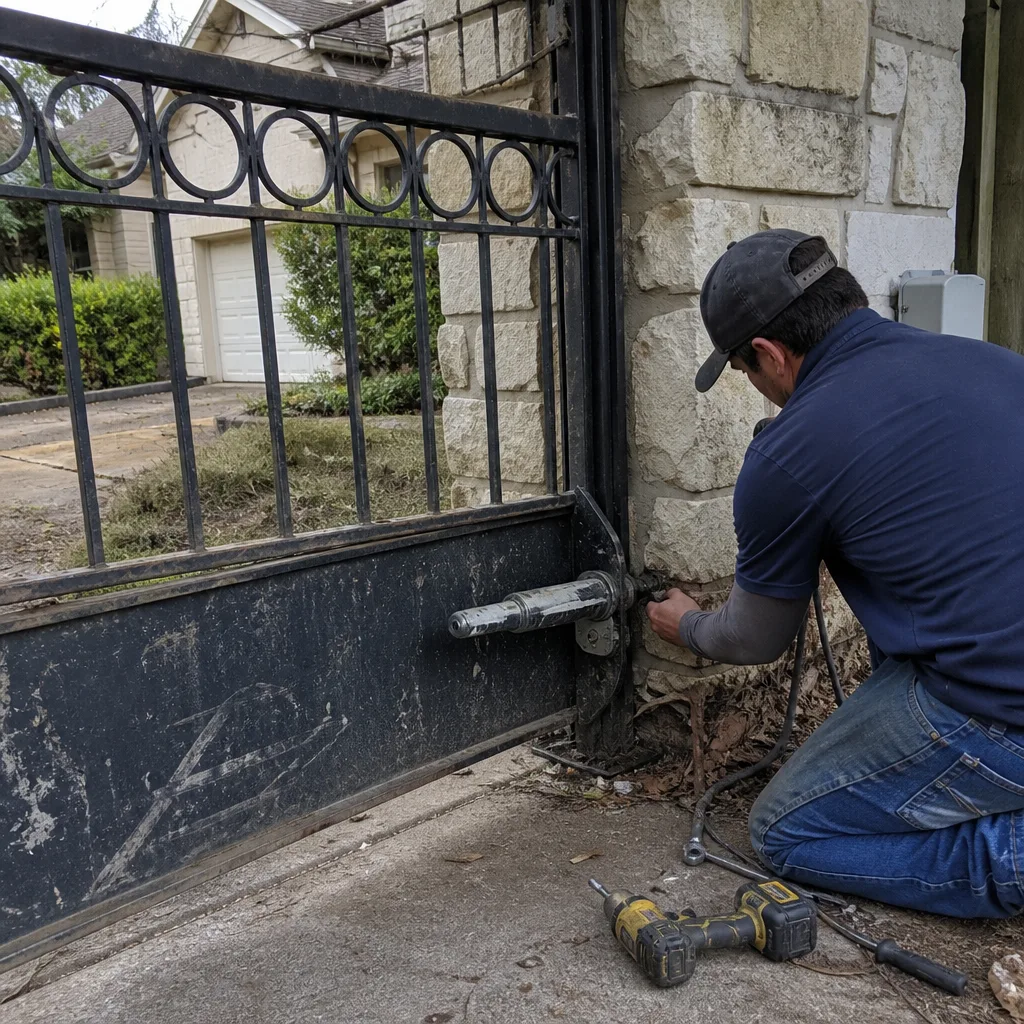 Before
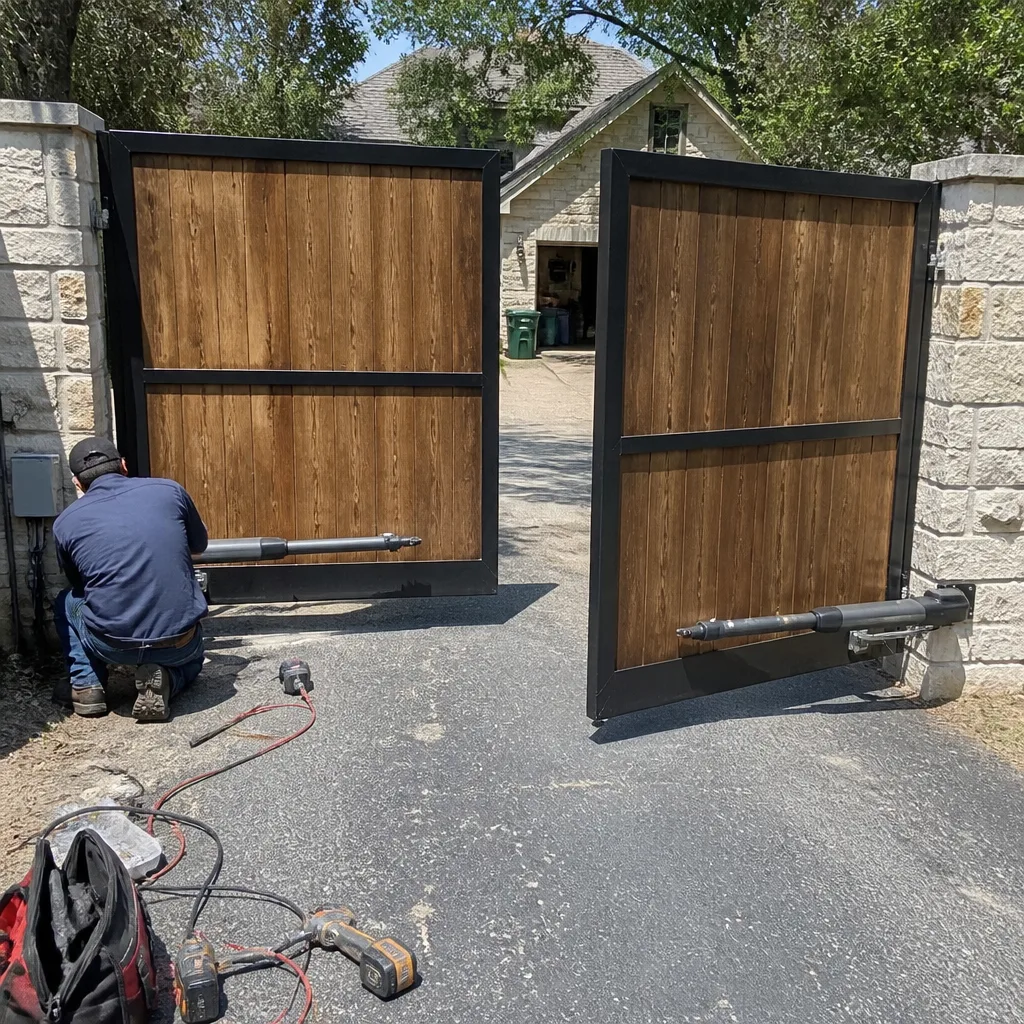 After
After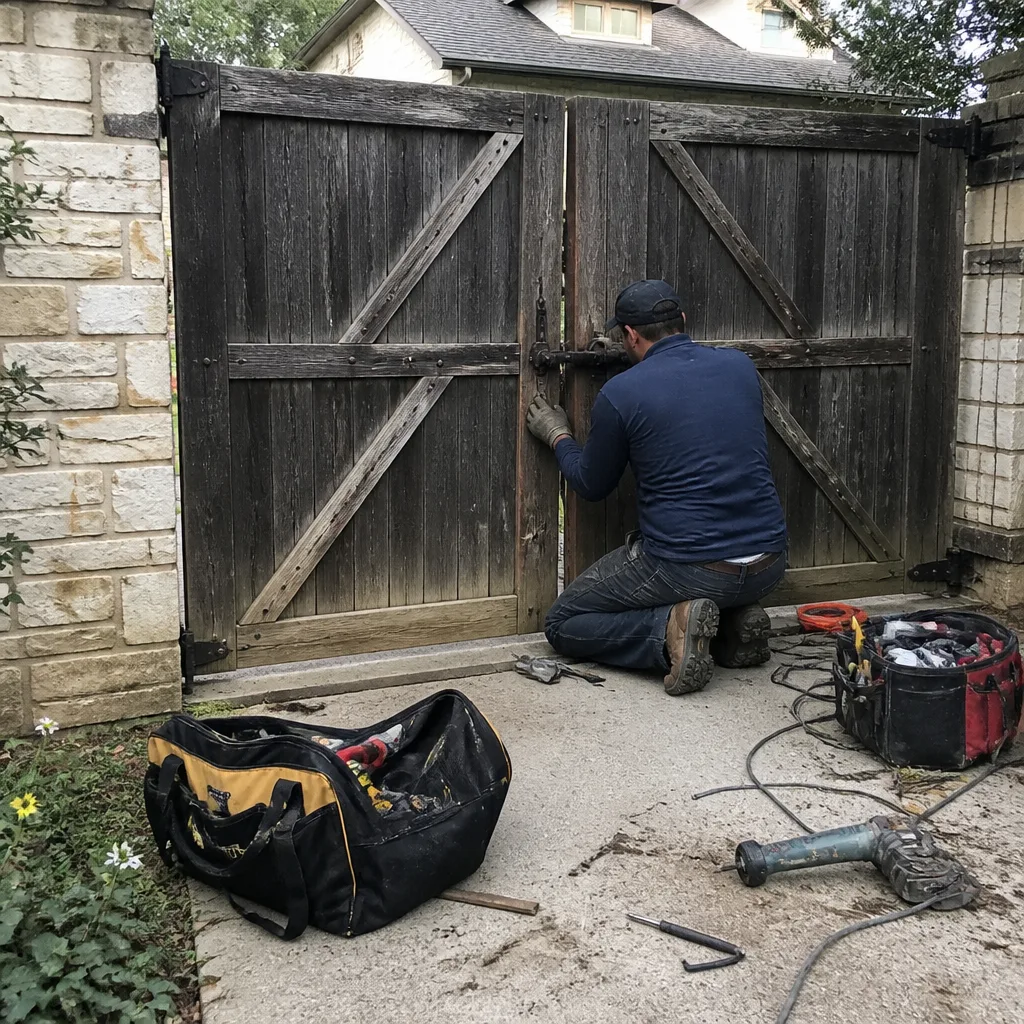 Before
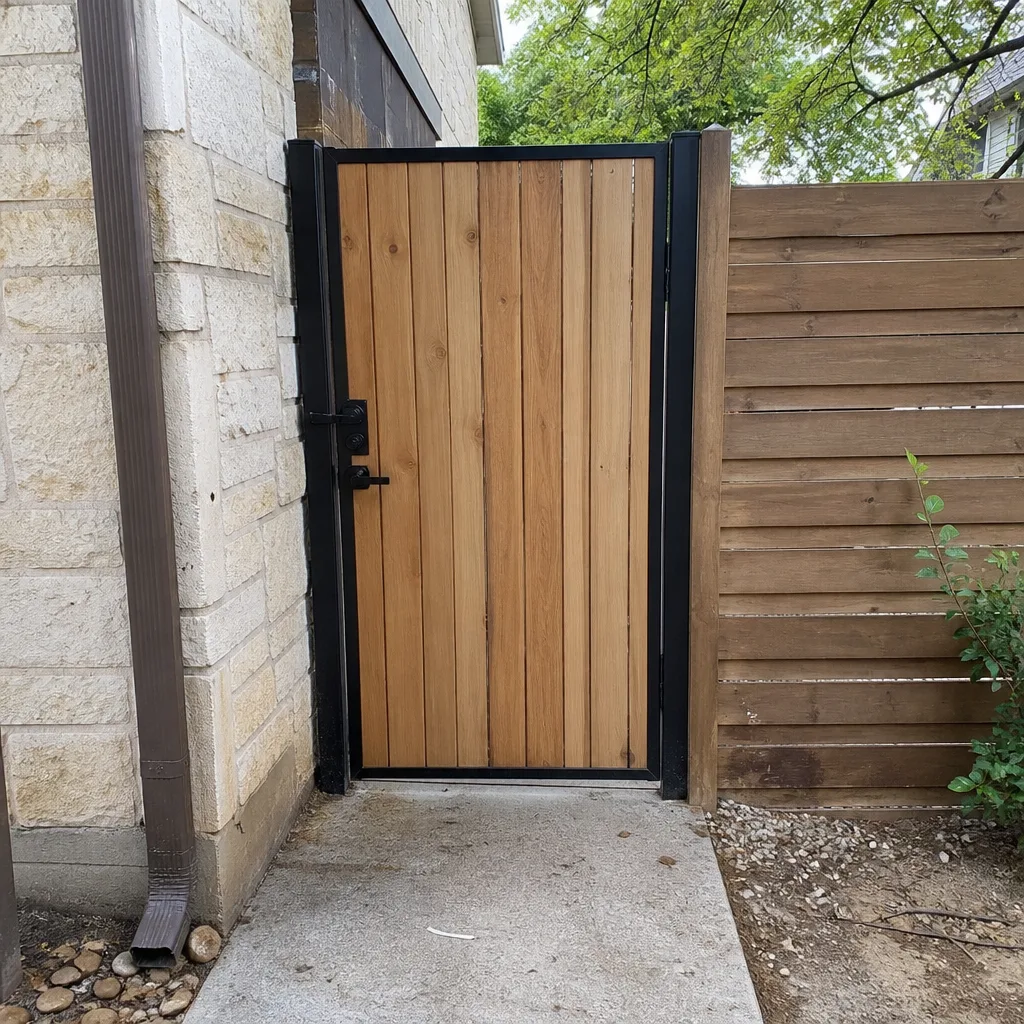 After
After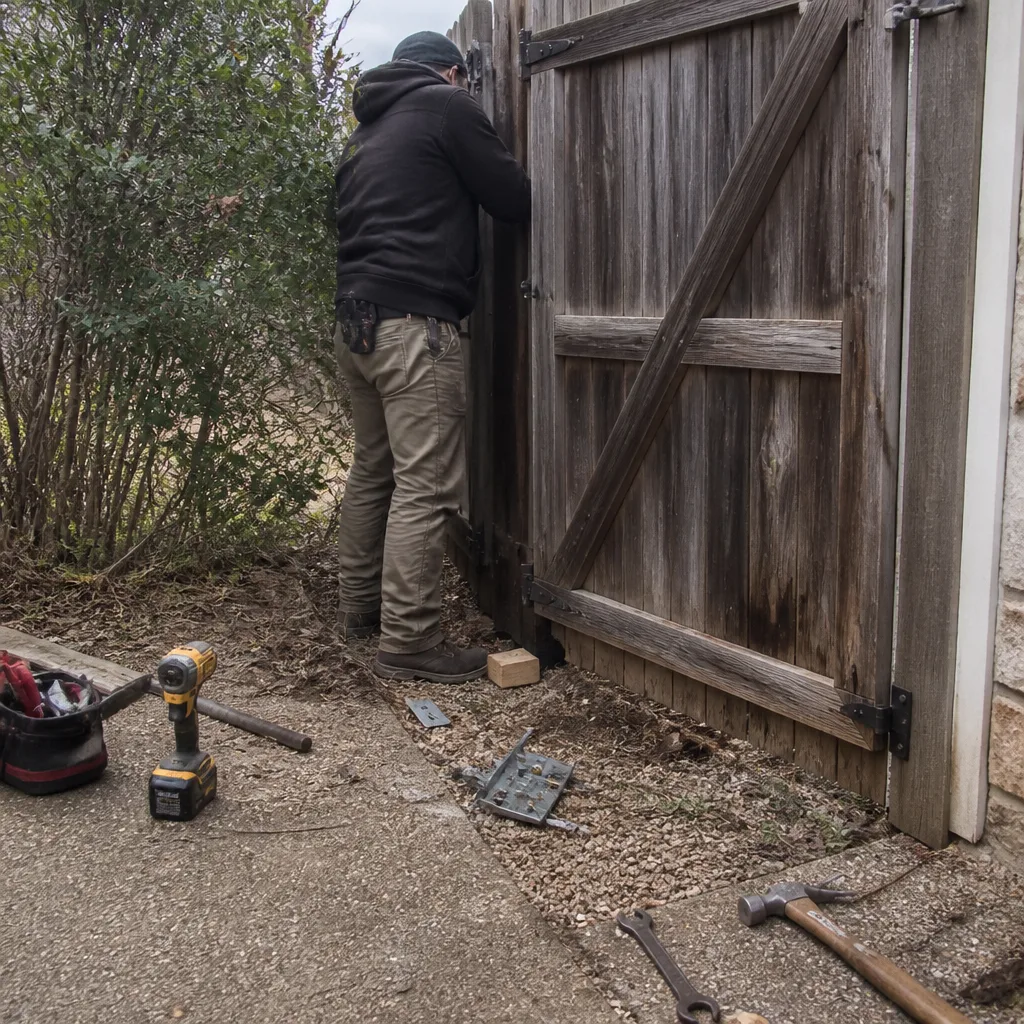 Before
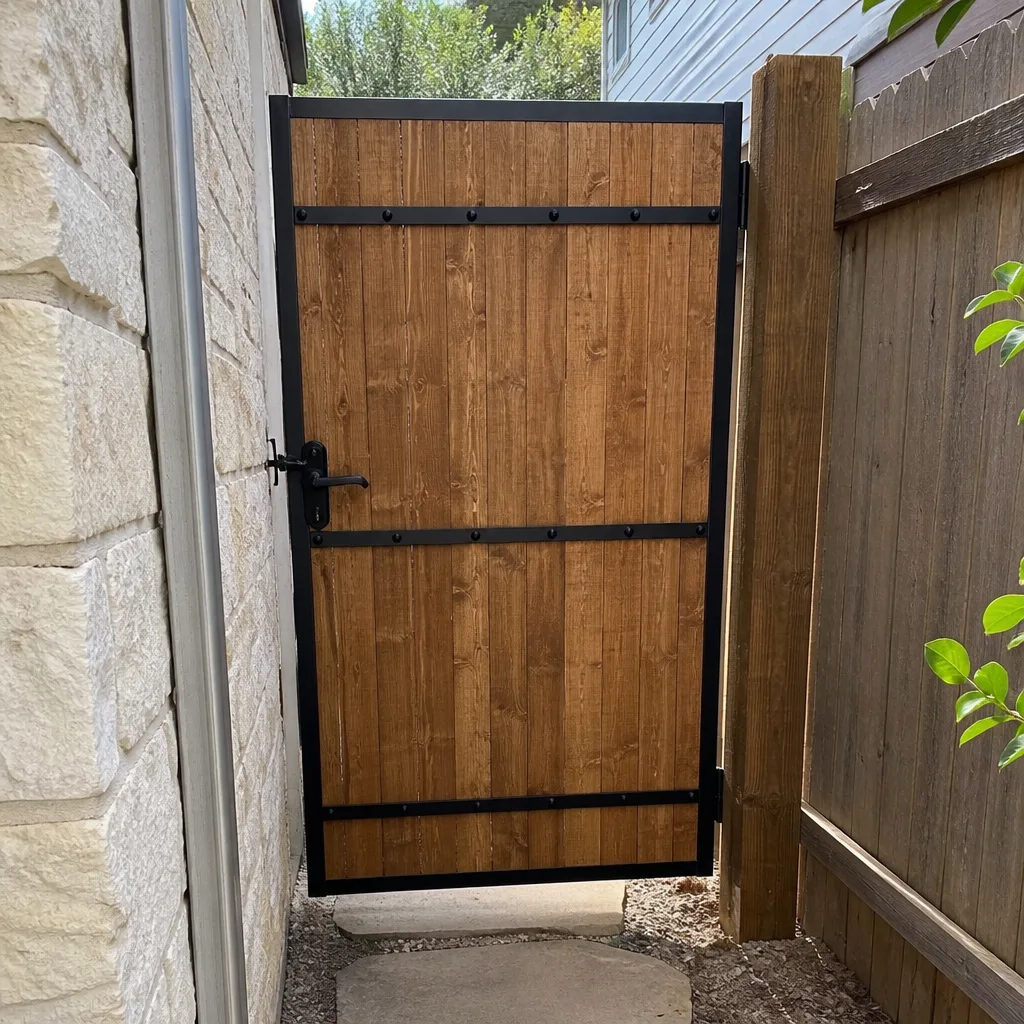 After
After