
Last updated October 16, 2026
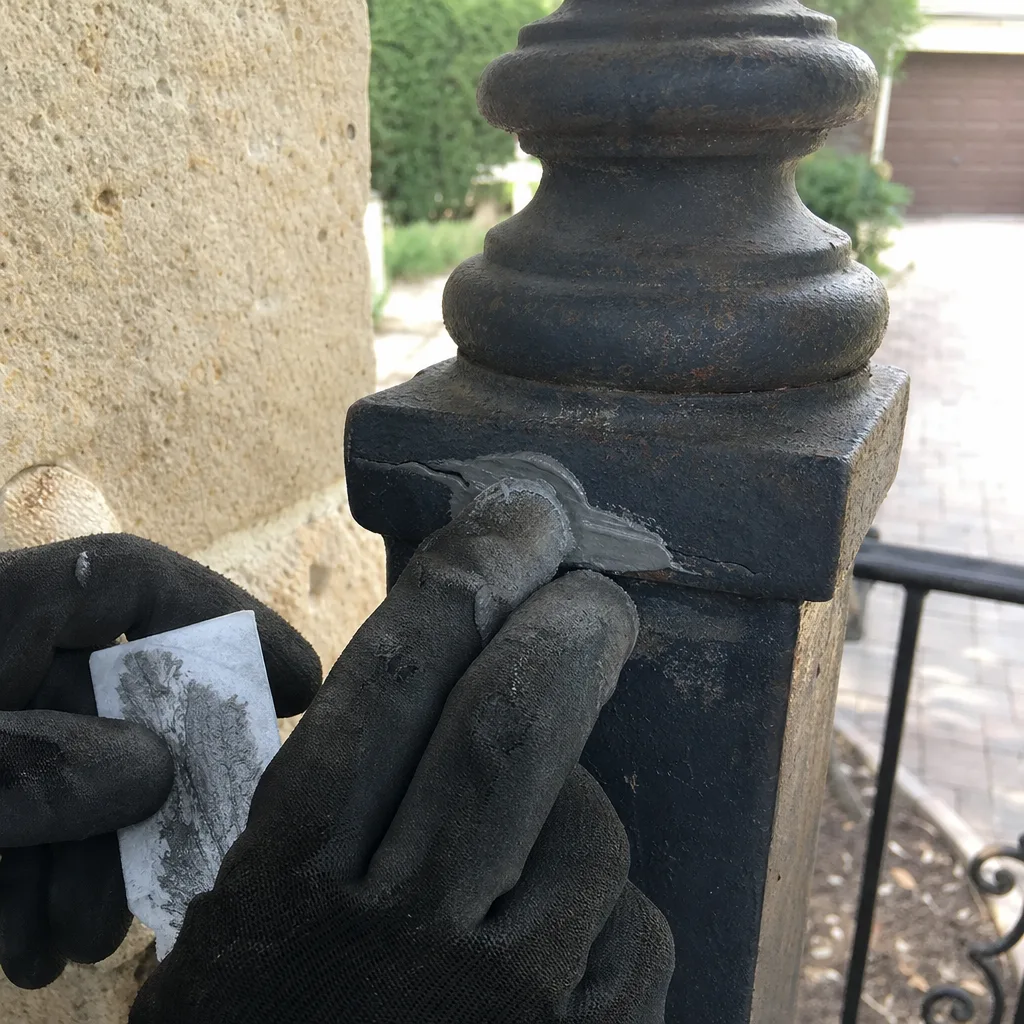
 Wrought iron
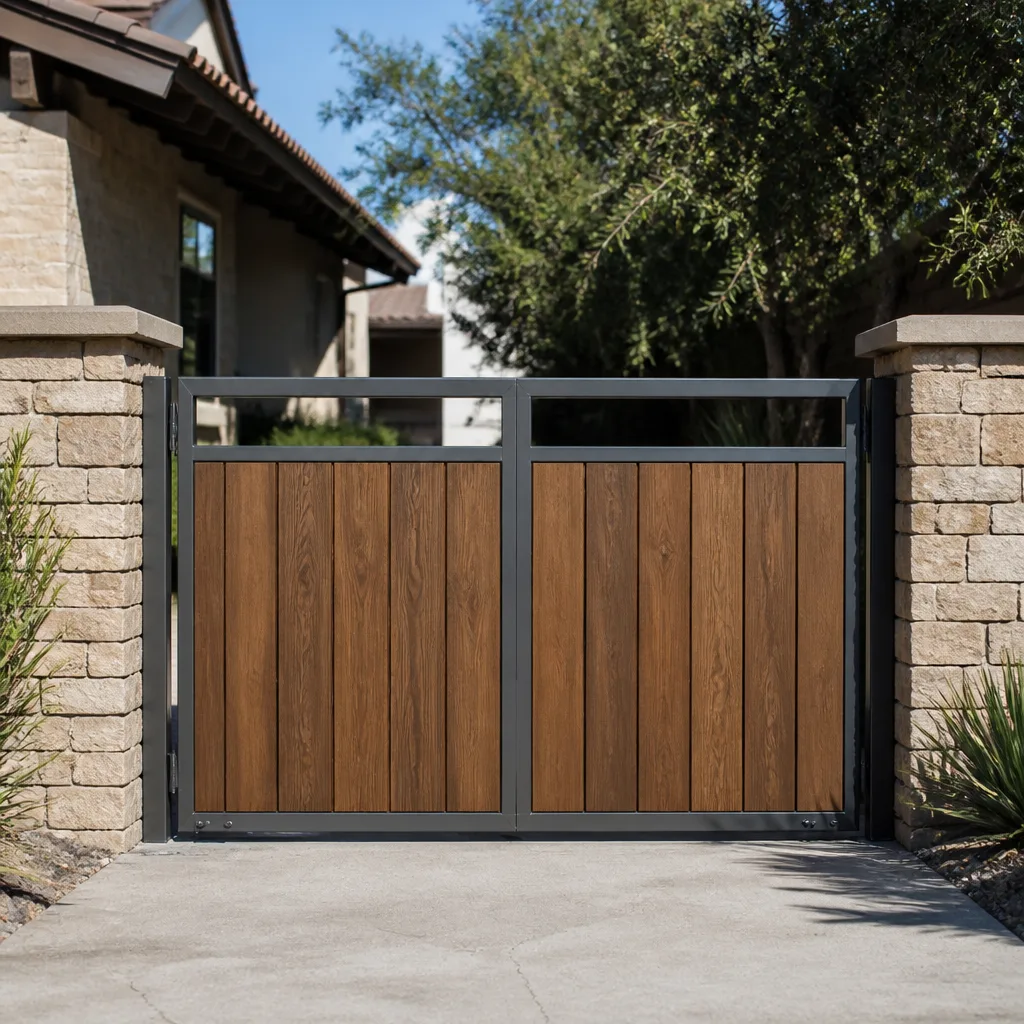 Wood & steel frame
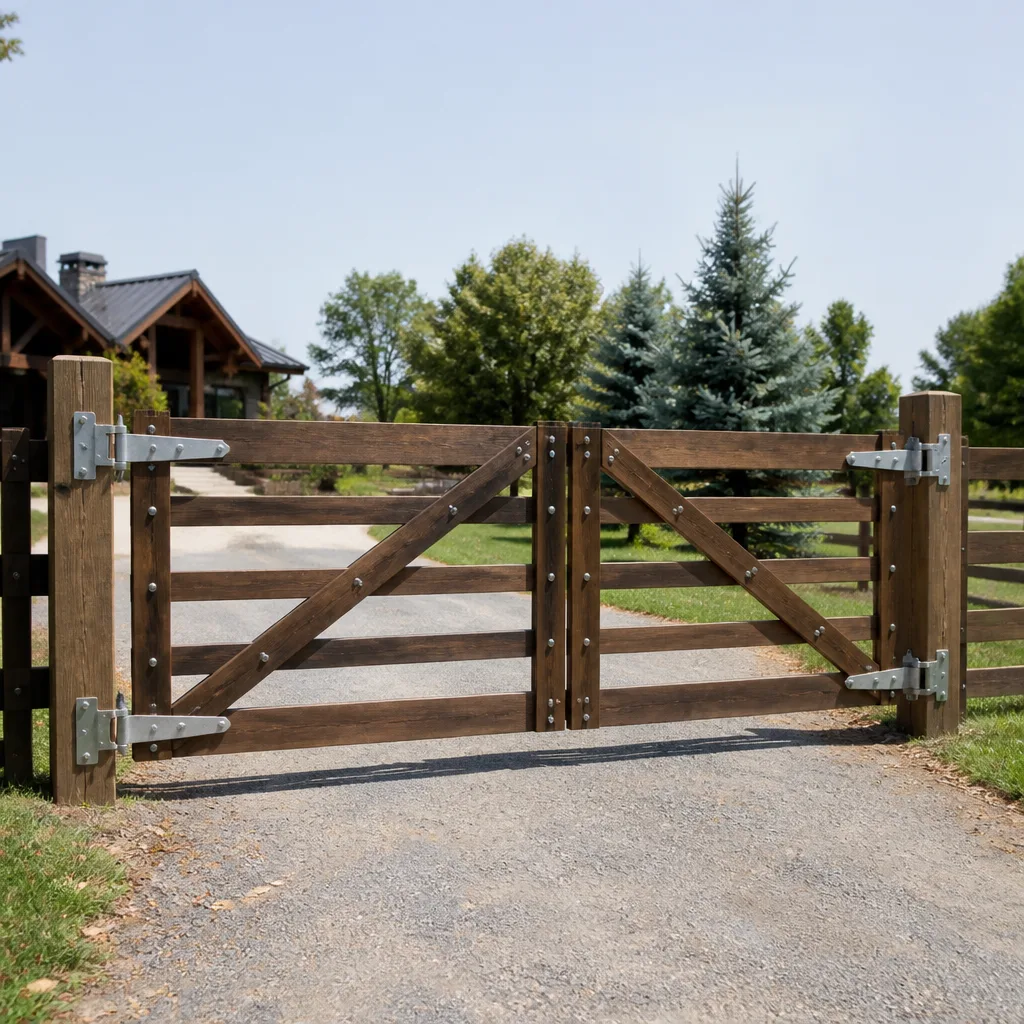 Farm & ranch
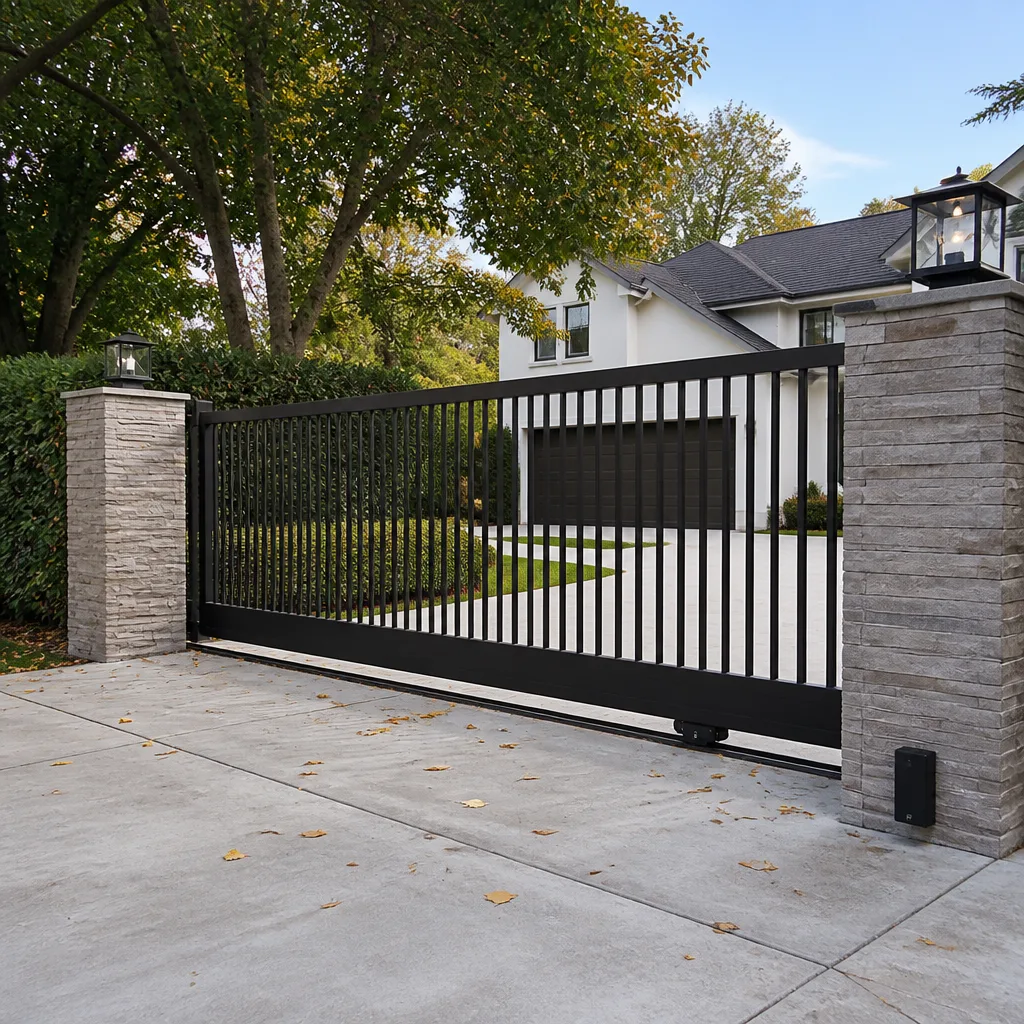 Sliding driveway gates
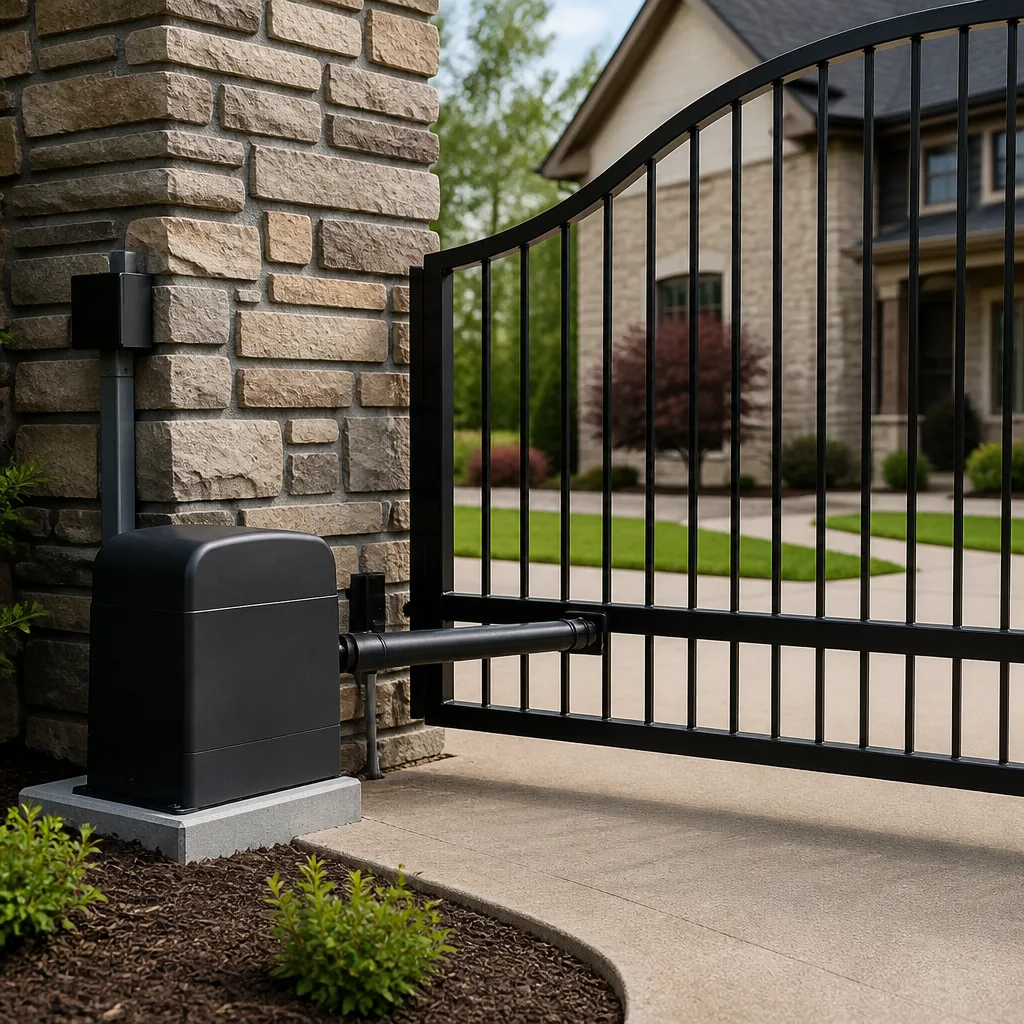 LiftMaster operators
Free on-site gate assessment - hinges, posts, and your LiftMaster or Nice gate operator checked before anything is quoted
The assessment is free and the quote is the invoice.
Get your free estimateGate Repair Cost Breakdown: The Austin Homeowner’s Reference for 2026
The most common gate repair call we field in Austin, “my gate won’t fully close,” has eight different root causes that range in price from about $85 to over $1,800. A contractor who quotes a flat price over the phone without asking which one you’re dealing with hasn’t diagnosed anything yet. This guide maps real 2026 Austin price ranges to specific repair types so you can budget before you call, recognize price inflation on the spot, and read an estimate like someone in the trade. We’re Portcullis Gate Repair Austin, and we’ve been fixing gates in this city since 2008.
Styles & brands we work with
Quick Answer
Gate repair in Austin typically costs between $95 and $2,400 in 2026, depending on what’s actually wrong. A limit switch adjustment or a simple sensor realignment runs $95 to $180, while a failed operator motor swap lands between $450 and $900, and a full post-and-weld overhaul can reach $2,400. Most common repairs fall between $150 and $650. The spread is wide because “fix my gate” can mean eight different things, and the only way to get a real number is to have the specific failure identified first.
Table of Contents
- Austin Gate Repair Price Realities in 2026
- The 12 Most Common Austin Gate Repairs and What They Cost
- Three Line Items That Inflate Austin Gate Repair Bills
- How to Read a Written Gate Repair Estimate
- Repairing a Failed Weld vs. Replacing a Gate Section
- What the Kingswell Written-Price Promise Means in Dollars
- Austin-Specific Factors That Drive Gate Repair Costs
- Common Mistakes to Avoid
- When to Call a Professional
- Frequently Asked Questions
- The Bottom Line
Austin Gate Repair Price Realities in 2026
Austin gate repair pricing sits slightly above the Texas average in 2026. Labor rates here run $85 to $125 per hour for licensed gate technicians, compared to $70 to $100 in San Antonio and $65 to $95 in Fort Worth. The reason is simple: Austin has more hillside properties than any other major Texas metro, and hills mean longer gate runs, heavier leafs, and more torque on operators and hinges. We see swing gates on Westlake Drive that weigh 900 pounds or more. In the flats of Cedar Park or Pflugerville, the same gate might weigh 350 pounds. Weight is the quiet variable behind every repair quote.
The Austin market also has a real supply-side squeeze. Since 2022, we’ve watched the number of gate-specific technicians in the metro area stay flat while new builds in Leander, Hutto, and Dripping Springs keep adding gates that will need service three to five years out. That keeps labor rates firm. When you combine those two forces, the same repair that costs $380 in Round Rock can run $450 near Lake Travis. Not because anyone is gouging, but because the tech’s time is priced to the market they serve.
One more Austin-specific note: limestone is everywhere, and it matters for costs. Digging a new post in Austin means hitting rock in roughly four out of ten residential jobs. That’s why post replacement quotes here often include a “rock contingency” line item of $75 to $150. If you ever get a post quote without that line, ask how the company handles limestone. The answer tells you a lot about how honest the number is.
For a broader view of what gate work looks like across the metro, our Gate Repair in Austin page covers the full service landscape.
The 12 Most Common Austin Gate Repairs and What They Cost
Below is the table we use internally when quoting, based on our own job history across the Austin metro since 2008. The low column is the figure for the simplest version of the repair. The high column is what happens when the gate is heavy, the operator is buried behind landscaping, or the underlying issue has been ignored for a year. Mid is what most homeowners should budget.
| Repair Type | Low | Mid | High | What Drives It to the High End |
|---|---|---|---|---|
| Limit switch adjustment | $85 | $140 | $220 | Older DoorKing or FAAC units with corroded contacts |
| Safety sensor realignment | $95 | $150 | $250 | Post shifted on a hillside; requires remounting |
| Circuit board replacement | $280 | $450 | $680 | Power surge damage; board is backordered |
| Actuator (motorized arm) replacement | $420 | $650 | $950 | Long leaf gate needing a stronger actuator |
| Operator motor swap | $400 | $550 | $800 | Branded motor for LiftMaster or Elite units |
| Hinge replacement (both hinges) | $180 | $350 | $600 | Custom steel work or welded plate not off-the-shelf |
| Weld repair (single point) | $120 | $250 | $450 | Structural weld at a post, not a cosmetic bead |
| Track straightening (slide gates) | $200 | $400 | $700 | Concrete pad settled and needs re-pour section |
| Wheel or roller replacement | $90 | $170 | $280 | Heavy wood gate; rollers embedded in concrete |
| Chain or belt replacement | $110 | $220 | $380 | Long commercial-style run over 20 feet |
| Keypad upgrade | $150 | $280 | $450 | Mighty Mule or Ghost Controls wireless integration |
| Post replacement (single gate post) | $600 | $1,100 | $2,400 | Limestone removal; gate must be re-hung and re-leveled |
Most repair calls we run in Austin fall between $150 and $650. The two exceptions that push past $1,000 are post replacement and full operator replacement, which are really two or three repairs bundled into one job. If a phone quote lands far outside these bands, ask for the line-item breakdown before you commit. For reference, we’ve put our own service approach on the Portcullis Gate Repair Austin home page if you want to see how a fixed-scope quote is structured.
Three Line Items That Inflate Austin Gate Repair Bills
We’ve read a lot of competitor estimates over the years. Most are fair. Some are not. Here are the three line items that show up in Austin more often than they should, and how to spot them.
1. Diagnostic fees that never get waived on repair. A diagnostic fee of $60 to $90 is legitimate when the technician shows up, identifies the problem, writes you an estimate, and you choose not to proceed. It is not legitimate to charge it and then also charge full repair rates on the same visit. In our shop, the diagnostic is free when you hire us for the repair, because the time spent figuring out the problem is part of the repair. If a company’s estimate shows a “diagnostic evaluation” of $89 plus a separate repair labor line of $110 per hour for the same visit, you’re paying for the same hour twice. Ask them to point to the line where the diagnostic is credited back on repair approval.
2. After-hours surcharges on standard weekday calls. We have seen estimates that add a $75 “emergency response” fee to a 2:00 PM Tuesday repair. That is not an after-hours call. An after-hours surcharge applies to nights, weekends, and holidays, and even then it should be a flat number you agreed to before dispatch. Read the fee line carefully: “priority scheduling fee,” “expedited dispatch,” or “service call premium” on a standard weekday appointment is the company charging you for showing up on time. That line should be zero.
3. Parts marked up more than 30% over retail. A replacement circuit board for a common Mighty Mule or Ghost Controls operator retails from $110 to $240 depending on the model. A 30% markup puts it at $143 to $312, which is fair for sourcing, stocking, and warranty handling. A 75% markup puts it at $192 to $420, and that’s the kind of number that should send you to a second quote. Markup beyond 30% is often padding the labor line by hiding it in the part. A legitimate tech is not afraid to show you the part cost as a separate line item with its own number.
For more on what to expect when an electric operator is the culprit, visit our Electric Gate Repair in Austin page.
How to Read a Written Gate Repair Estimate
Every repair estimate you receive should pass a simple test: can you hand it to a second company and have them understand exactly what’s included? If the answer is no, the estimate is not written for your benefit. Here’s the structure we follow on every Portcullis job, and what we recommend you look for.
What should always appear as a separate line item:
- Parts. Each part with its make and model, not just “replacement board.”
- Labor. A clear hourly rate and the estimated number of hours, or a flat job labor price.
- Disposal. If the old actuator or board is being removed, there should be a small disposal line, typically $15 to $40.
- Warranty or guarantee. The duration of the repair guarantee, in writing, with the terms of what’s covered.
- Post-repair adjustments. Most gates need limit and force tweaks after a new part goes in. This is often a line item around $50 to $90, and it should be included in the total, not added later as a “tuning fee.”
What should never be bundled:
- A “comprehensive service package” that includes unspecified “system checks.” If the estimate doesn’t name the systems being checked, you’re paying for vague language.
- “Miscellaneous shop supplies” without a dollar figure or a description. That’s a padding line.
- “Permit and inspection” on a standard residential repair. Gate repair in Austin does not require a permit for replacing a motor, board, hinge, or sensor. If you’re replacing an entire driveway gate on a new install, that’s a different conversation, but a repair estimate should not carry permit language.
Here’s a numbered breakdown of how we build an estimate, which is also a good list to follow if you’re comparing two companies:
- Diagnosis first. We identify the failed component, not the symptom. “Gate won’t close” is a symptom; “limit switch contacts corroded on a BFT operator” is a diagnosis.
- Part number and price. We list the exact part, the retail cost, and our markup. You see the number before we order.
- Labor as a flat number. We quote repair labor as a fixed job price, not an open-ended hourly estimate with a vague range. The price you approve is the price you pay.
- Disposal line. Small, disclosed, and itemized.
- Warranty line. The 365-Day Done Right Promise, stamped on the invoice, with a clear statement that a return visit inside that period costs you nothing.
A good estimate fits on one page and makes sense when read out loud. If you have to ask what a line means, the estimate isn’t done.
Repairing a Failed Weld vs. Replacing a Gate Section
We get this question often after a gate has been hit by a car or has sagged badly over years: should we reweld it, or is it smarter to replace the whole section? The answer depends on where the weld failed and what the gate is made of.
A failed weld at a hinge mount or a latch plate is almost always worth repairing. That weld is in a high-stress area, and rewelding it with proper gusseting costs $120 to $450. The repair is focused, doesn’t require removing the gate leaf, and can extend the gate’s life by several years. We do this on steel tube residential gates in Circle C and Avery Ranch regularly.
A failed weld in the middle of a long horizontal rail is a different calculation. If the rail has rotted from inside because water got in and sat there, rewriting the break point is just selecting the next weak spot. In that case, replacing the section (or the entire rail if it’s a single-piece design) runs $400 to $1,200, but it’s money that doesn’t have to be spent again in 18 months. Where the weld is the problem, repair is smarter. Where the steel itself has failed, replacement is smarter. A good technician will show you the difference with a flashlight and a wire brush, not just tell you which one to pick.
When we’re not sure, we lean toward the repair first. It’s cheaper, and the 365-Day Done Right Promise covers us if the weld doesn’t hold, which means you’re not gambling on our judgment. If you’re in a situation where the gate is original to a 2005-era build and has been repaired twice already, that’s a signal to move to new gate territory, which is covered on our Gate Installation in Austin page.
What the Kingswell Written-Price Promise Means in Dollars
The Kingswell Guarantee is the reason we put price in writing before anyone picks up a tool. Most gate companies, in our experience, give a verbal range and then invoice the actual once the work is done, which is how a $400 repair becomes a $700 invoice. The written-price promise means the number you approve before work starts is the number on the final invoice. Period.
In dollar terms, here’s what that means in 2026 on a typical actuator replacement on a steel swing gate in Austin:
- Verbal quote model: “Probably $500 to $700” over the phone, then a final invoice of $820 because “the mounting plate was corroded and needed fabrication.”
- Kingswell model: We inspect the actuator, measure the gate, check the mounting plate, and write $655 on the estimate before work begins. If we find corrosion mid-job, we stop, explain it, and get your approval on a new written number before touching it. The invoice matches the approved number.
The Kingswell Way uses five plain-English commitments on every job, and they’re not marketing copy. They’re the shape of the estimate:
- Say the price before the work. Written, line by line.
- Show up in the window we gave. Not a four-hour range; a real arrival window.
- Leave the place cleaner than we found it. No metal shavings, no grease smears on the driveway.
- Put the guarantee in writing. The 365-Day Done Right Promise is stamped on the invoice, not mentioned in passing.
- Come back if it fails. Free return visit inside the guarantee period. No diagnostic charge, no labor charge, no parts charge on our work.
Every Portcullis location is independently owned and operated, which matters because each owner signs the same guarantee. It’s not a franchise promise with fine print. It’s a written one, and if the repair fails inside 365 days, we come back and fix it at no charge. Dean Prescott has run this Austin location since 2008, and the guarantee has been on every invoice since day one.
Austin-Specific Factors That Drive Gate Repair Costs
Every city has quirks that push repair costs up or down. Here are the four Austin-specific ones that show up on our invoices.
Limestone and post work. As mentioned earlier, digging new post holes in Austin hits rock on a large share of residential jobs. A standard post replacement elsewhere in Texas might be 4 hours of work; in Austin it often includes an extra hour of rock breaking or core drilling. That’s why our post replacement quotes carry a contingency line of $75 to $150. It’s not a surcharge; it’s an acknowledgment that the ground under your gate is not the same as the ground under a gate in Houston.
Heat and UV on operators. Austin summers run hot enough to shorten the life of circuit boards and plastic gear assemblies. We replace boards more often in August and September, not because August breaks them, but because three months of 100-degree afternoons have cooked the caps. If your operator sits in full sun against a west-facing stone wall in Tarrytown or Barton Hills, expect to replace the board roughly every five to seven years instead of eight to ten.
Hillside gate weight. Gates on sloped driveways in Westlake, Northwest Hills, and the Jester neighborhood have to be set with more clearance to compensate for grade changes. The actuators on those gates work harder on every cycle, which means actuator replacement on a hillside Austin home runs about 20% higher than the same job on a flat lot in Georgetown. It’s not a different part; it’s the time to set the travel limits correctly on an irregular slope.
Recent freeze-thaw cycles. Winter Storm Uri and the hard freezes since have stressed gate hardware across Austin. Steel posts set in expanding clay soil shift during wet winters, which throws off sensor alignment and puts strain on hinges. We see a wave of alignment calls every February and March in neighborhoods with heavy clay, which includes much of the east side and Manor. It’s cheap to fix if caught early; it’s a post job if ignored for a year.
Common Mistakes to Avoid
- Accepting a phone quote without a diagnosis. A gate that won’t close has eight possible causes, and the repair price differs by a factor of ten between the cheapest and the most expensive. A real quote requires a look at the specific failure. If you’re quoted a flat number after describing only the symptom, get a second opinion.
- Paying a diagnostic fee and then paying full repair labor. The diagnostic should be absorbed into the repair if you hire the company that diagnosed it. Double-paying for the same hour is the most common padding we see in Austin estimates.
- Signing off on an hourly labor range. A quote that says “labor: 2 to 4 hours at $110/hr” gives the company room to bill the top of the range no matter how long the job takes. A flat job price protects you.
- Skipping the written guarantee. If the guarantee isn’t on the invoice, you don’t have one. A verbal promise to “come back if it fails” is not enforceable. Our 365-Day Done Right Promise is stamped on every repair invoice for a reason.
- Delaying a sensor realignment. A misaligned safety sensor on an electric gate is a $95 to $150 fix. Left for six months while the gate auto-reverses constantly, it wears down the motor and turns into a $500 repair. Small fixes are cheap; deferred fixes are not.
- Welding a rusted rail. If the steel has rotted from inside, a new bead will break again within the year. Spend the money on a section replacement instead of paying for the same repair twice.
When to Call a Professional
Call a gate technician when the gate is binding at a hinge, when the operator runs but the gate doesn’t move, when the gate reverses on its own after closing, or when a post has visibly shifted. These are mechanical and electrical failures that don’t heal themselves, and delaying them usually doubles the repair cost within 12 months. If the gate has come off its track or a weld has broken, stop using the gate, disengage the operator if you can do so safely, and get someone out. A gate that falls is heavier than most people expect, and the safety sensors and force settings are not something to adjust by guesswork. Portcullis Gate Repair Austin offers free estimates across the Austin metro, including Cedar Park, Pflugerville, Round Rock, Lakeway, and the surrounding areas. Call (254) 280-0629 and a live person will answer.
Frequently Asked Questions
Most gate repairs in Austin run between $150 and $650 in 2026, with simple fixes like limit switch adjustments starting around $85 and full post replacements reaching $2,400 on the high end. The final number depends on which specific component failed, the weight of your gate, and whether the gate sits on a flat lot or a hillside. Call (254) 280-0629 for an exact quote on your specific gate, estimates are free.
Gate repair prices vary in Austin because labor rates differ, parts markup ranges from fair to inflated, and some companies charge a diagnostic fee that never gets credited back on repair. Our written-price promise means the number you approve before work starts is the number you pay, with no after-the-fact adjustments. If you’re comparing quotes, ask each company to show the part cost and the labor line separately.
We answer the phone live 24/7, including weekends and holidays, and we schedule same-day or next-day service for most urgent gate failures across the Austin metro. Emergency calls for a gate stuck open or a gate that has come off its track get priority dispatch. Call (254) 280-0629 and tell us what the gate is doing, we’ll give you a real arrival window before we hang up.
A full gate repair includes diagnosis of the specific failed component, a written parts list with pricing, fair labor as a fixed job price, disposal of the old part, limit and force adjustments after the new part is installed, and a written 365-day guarantee on the work. The price is agreed before any work starts, and if the repair fails inside the guarantee period, the return visit is free. For a broader look at service scope, see our Gate Repair in Austin coverage.
Yes. We service nine major gate-operator brands in Austin, including Mighty Mule, Ghost Controls, DoorKing, Elite, LiftMaster, FAAC, BFT, Linear, and Viking. Our technicians arrive already familiar with the specific system on your property, so you’re not paying for on-the-job research. For electric-specific issues, our Electric Gate Repair in Austin page walks through common operator failures.
Austin gate repair runs about 10 to 15 percent higher than the Texas average for most repairs, driven by higher labor rates and the prevalence of hillside and limestone properties in the metro area. The same hinge replacement that costs $350 on a flat lot in Pflugerville can run $420 on a sloped driveway in Westlake. The materials are the same; the labor time and the weight of the gate are not. Call (254) 280-0629 for a free estimate on your specific property.
The Bottom Line
Gate repair in Austin in 2026 is priced by the specific failure, not by the symptom, and a smart budget starts with knowing the difference. Most repairs land between $150 and $650, the most common Austin jobs are sensor realignments and limit switch adjustments, and the two expensive outcomes, post replacement and full operator replacement, only get more expensive the longer they’re deferred. The best protection against overpaying is a written estimate with separate parts, labor, and warranty lines, and a guarantee that survives the technician’s departure. That’s the Kingswell Way, and it’s the way every estimate from Portcullis Gate Repair Austin has been written since 2008.
If your gate is acting up, call (254) 280-0629 for a free estimate and a real arrival window. Dean Prescott and the team answer live, 24/7.
Written by Dean Prescott, Owner at Portcullis Gate Repair Austin, serving Austin since 2008.
See the difference
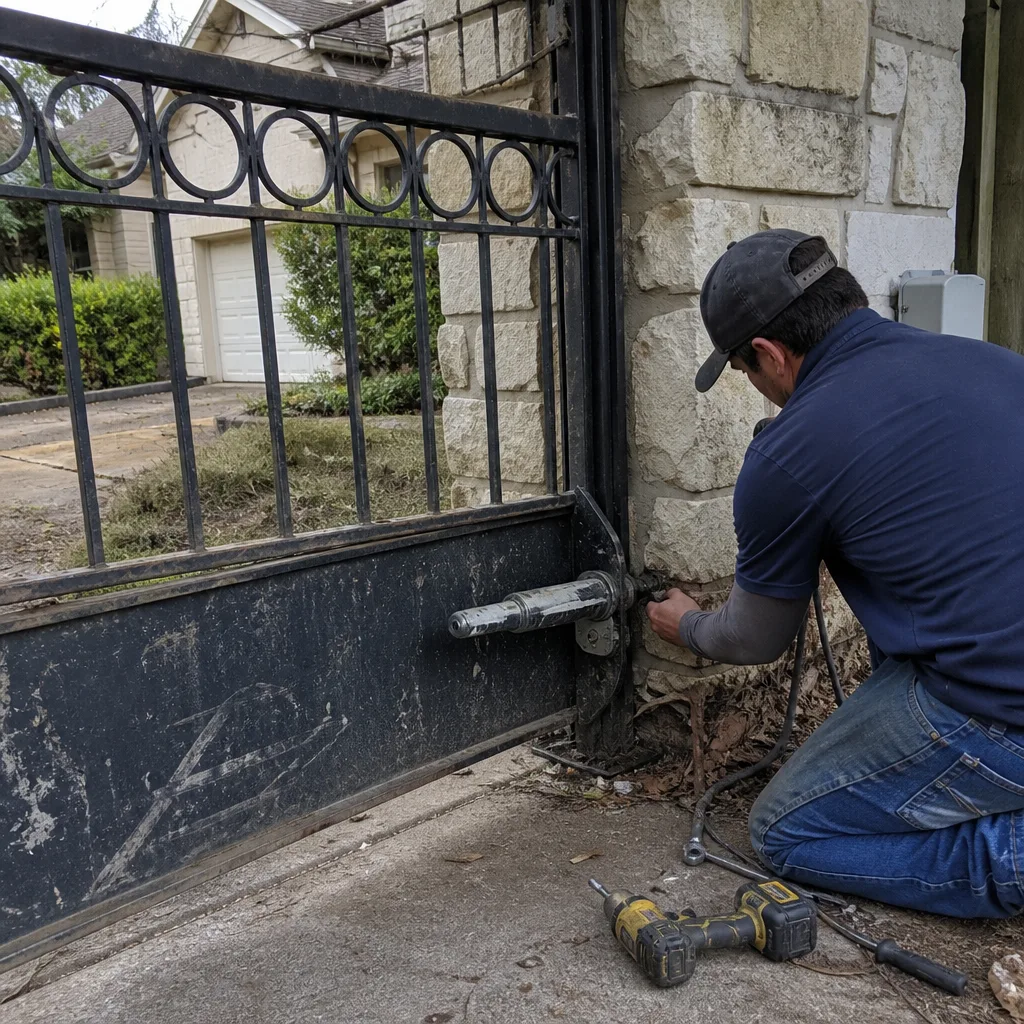 Before
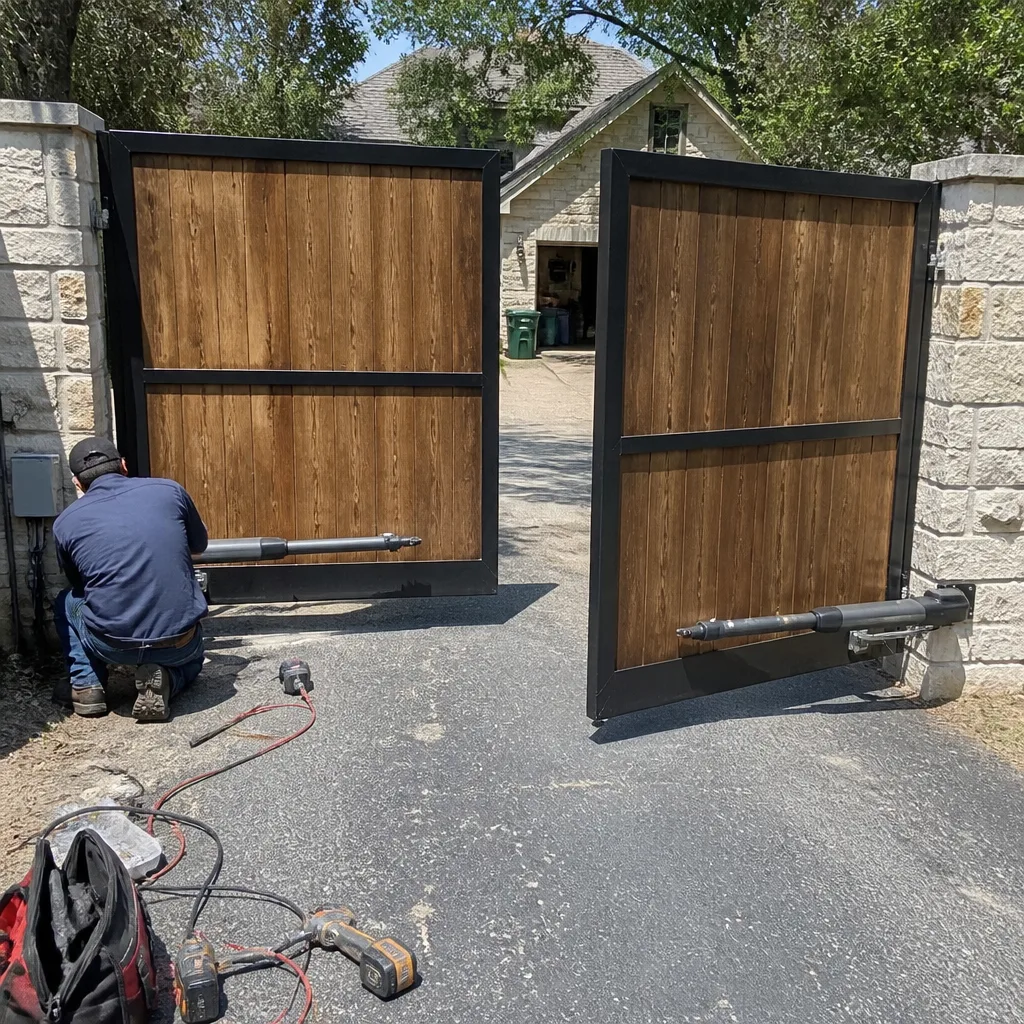 After
After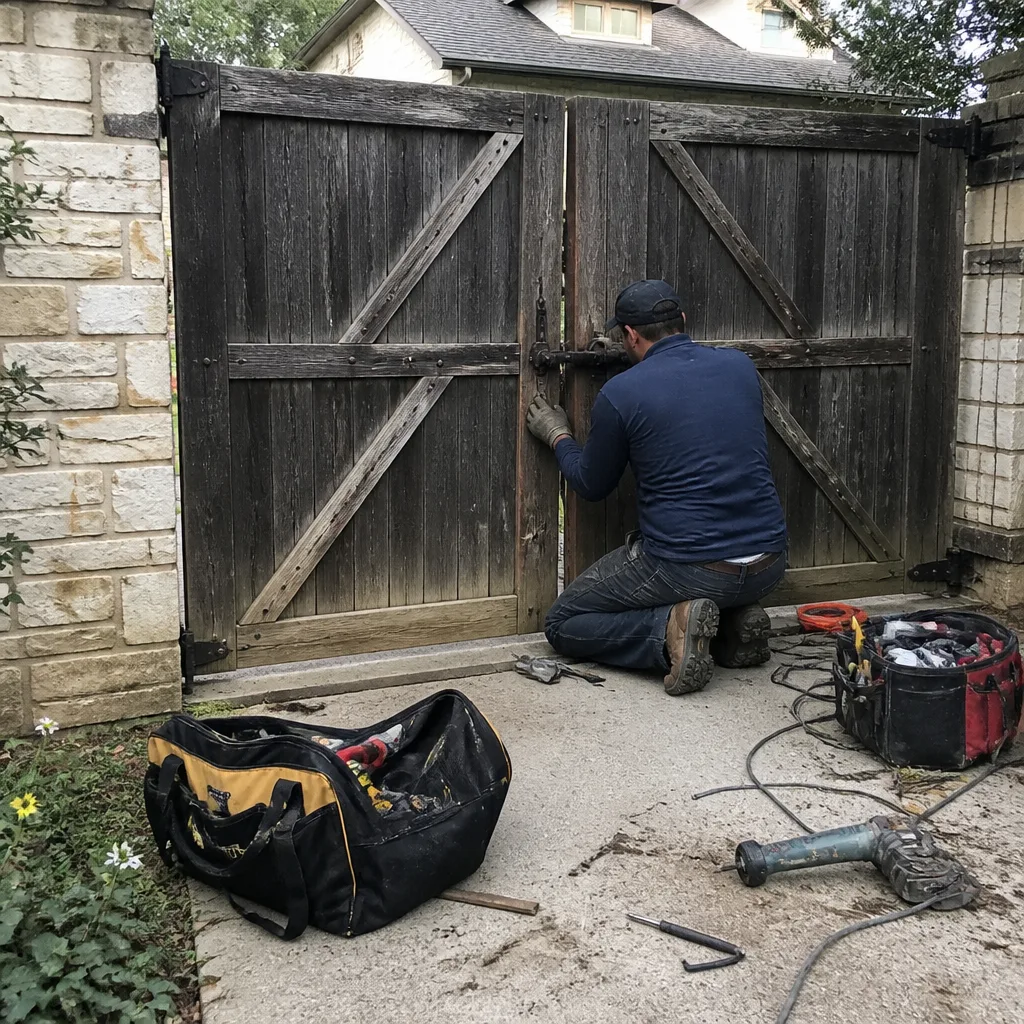 Before
 After
After Before
 After
After